
I recently received an update from the Japanese professor kindly helping me retrieve the seismic records from Akita, Aomori, Yamagata and Sendai. These observatories are believed to be the closest JMA observatories to an impact location roughly defined by radio and debris drift calculations.
Unfortunately Yamagata was only using a slow response unit so was not examined. All three of the other observatories did not photograph the paper seismograms onto Microfilm for the revenant time period in question. This was due to no interesting seismic events being observed by the staff at the time. All 3 stations recorded data up to around 8pm on the 31st, skipped the next 12 hrs then resumed recording.
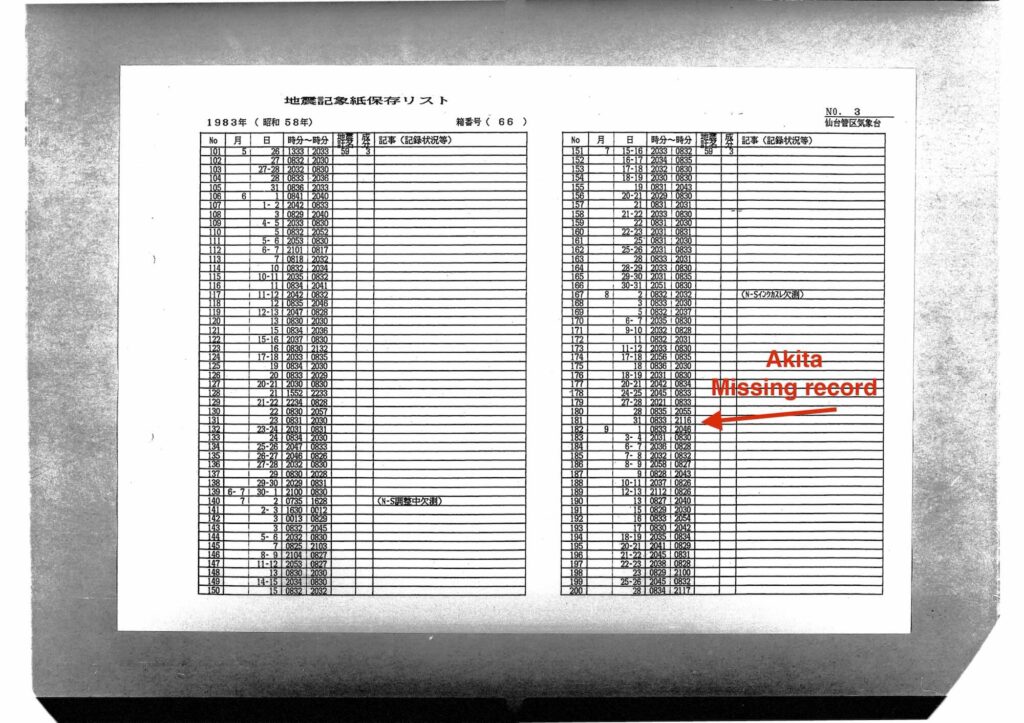
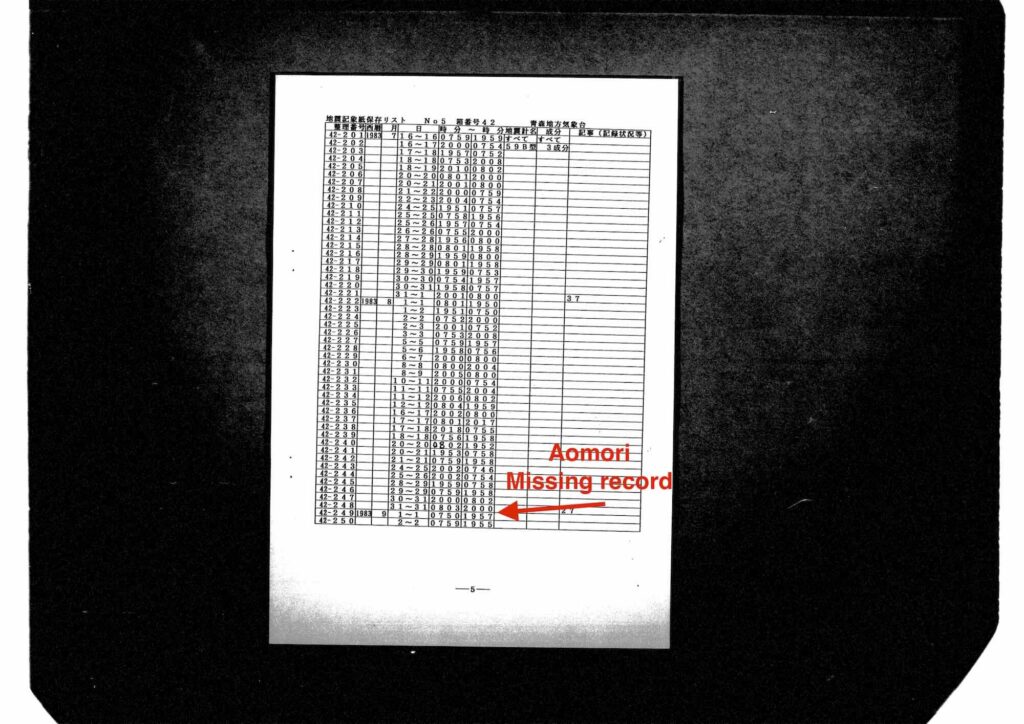
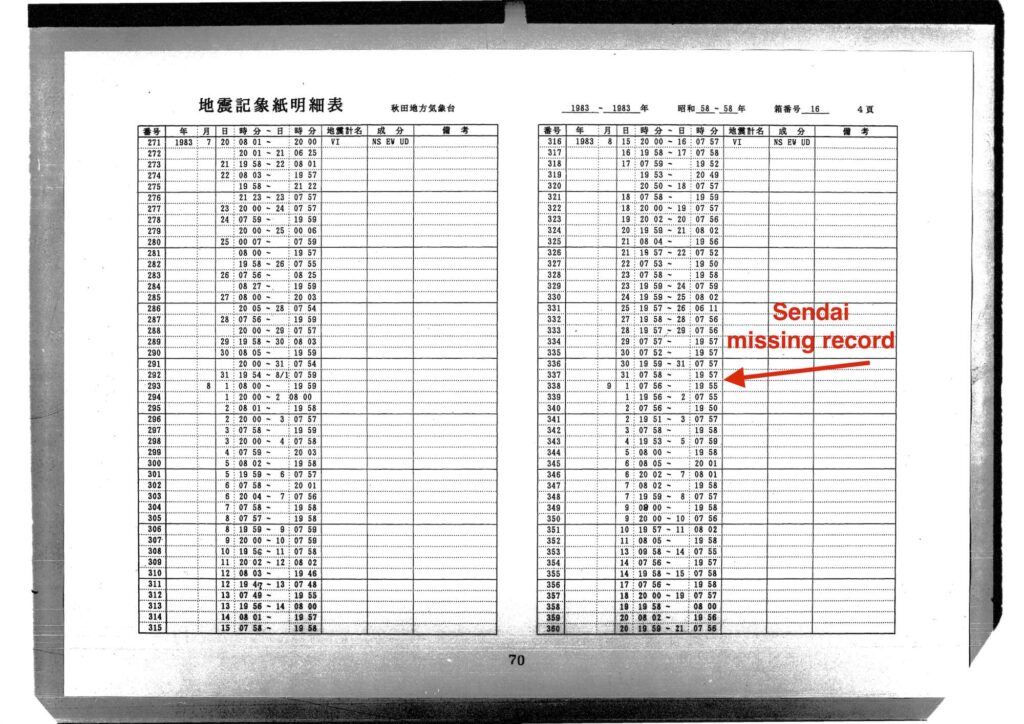
Initially I was disappointed but then I realised that this meant the period in question was seismically quiet and therefore if any records could be found then chances of finding a small signal would be high.
I also realised I had asked this Japanese professor specifically for the records from Akita, Aomori and Sendai and he had attempted to do exactly that. I then realised by browsing the university bulletins they publish that Tohoku and university ran its own network of seismograms and this network was denser than that of JMA. Seismograms were located at each of the following locations and were operational at the time.
- OGA – Oga (from Nov 1967), plus a temporary station in 1983
- NIB – Nibetsu (May 1969)
- HOJ – Honjo (Dec 1967)
- FUT – Futatsui (Dec 1967)
- TBS – Tobishima (Sep 1974)
- SBT – Shibata (1981)
- HRD – Hirosaki campus (Apr 1981)
- IWS – Iwasaki (Dec 1982)
- TMR – Tomari, Shimokita (Dec 1982)
- MMA – Minmaya (Feb 1983)
Of particular interest is the stations at Oga and on Tobishima Island. These are very close to where debris drift and radio comms put the impact. There was intense scientific interest in this region at the time due to the large earthquake on May 26, 1983 and the resulting aftershocks. It seems likely that paper records from the JMA and university sites still exist. I have requested the seismic professor make enquires into the the existence of any of these records.
I put an enquiry in at Headquarters for Earthquake Research Promotion (HERP) of Japanese government http://www.susu.adep.or.jp/index.html for the paper records of any station in the general area of interest.
I also performed another search of their database. This I had done numerous times before but there were never any records close to the period of interest. However, this time I received one result. A seismogram recorded at Matsushiro which is in Nagano had just been digitised. It is not ideal being approximately 400km from the area of interest but covered the time period of the morning of Sept 1, 1983.
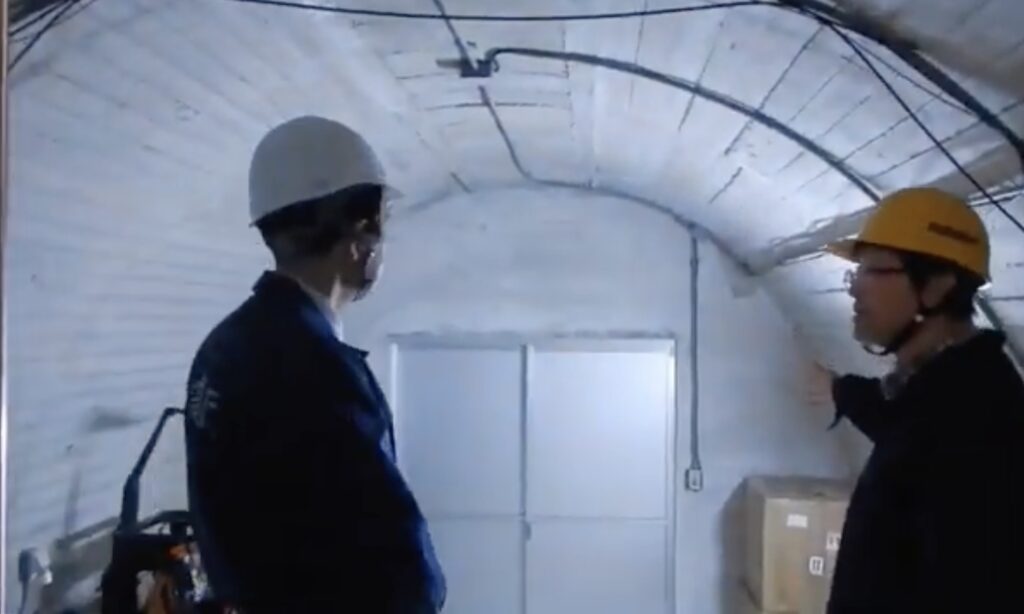
Matsushiro is an extremely interesting observatory. Unlike other observatories, this one is 100m underground in tunnels. This was started in 1949 when this military facility was converted to a seismic observatory. The concept is to be deep underground to be far from local seismic ‘pollution’.
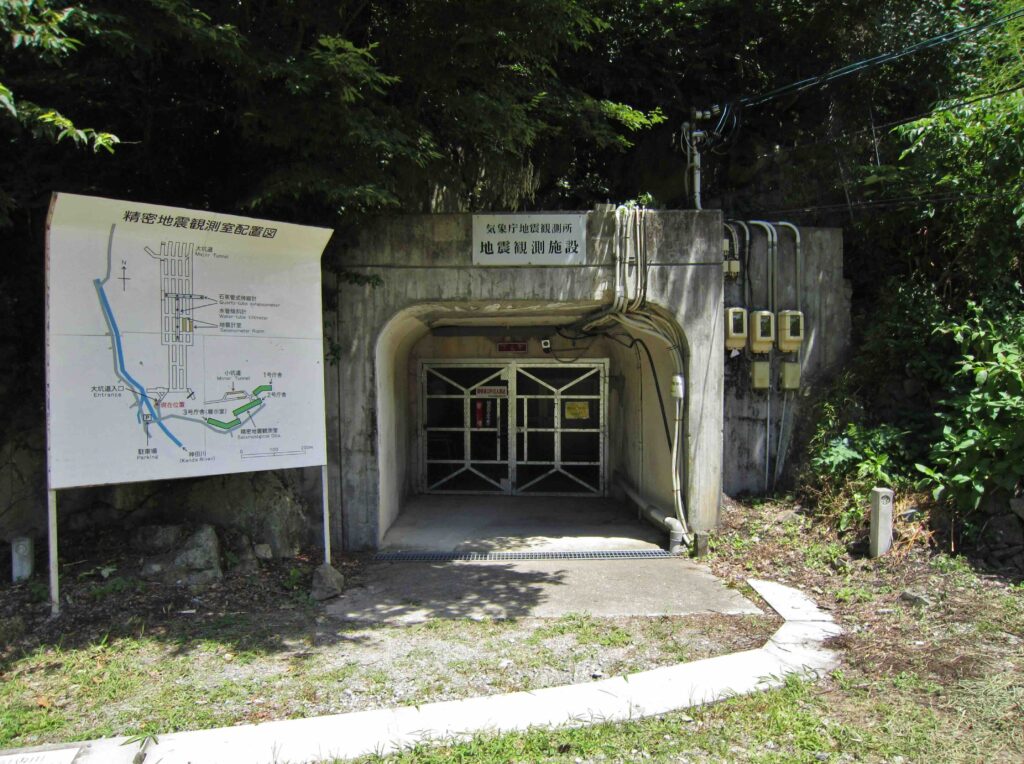

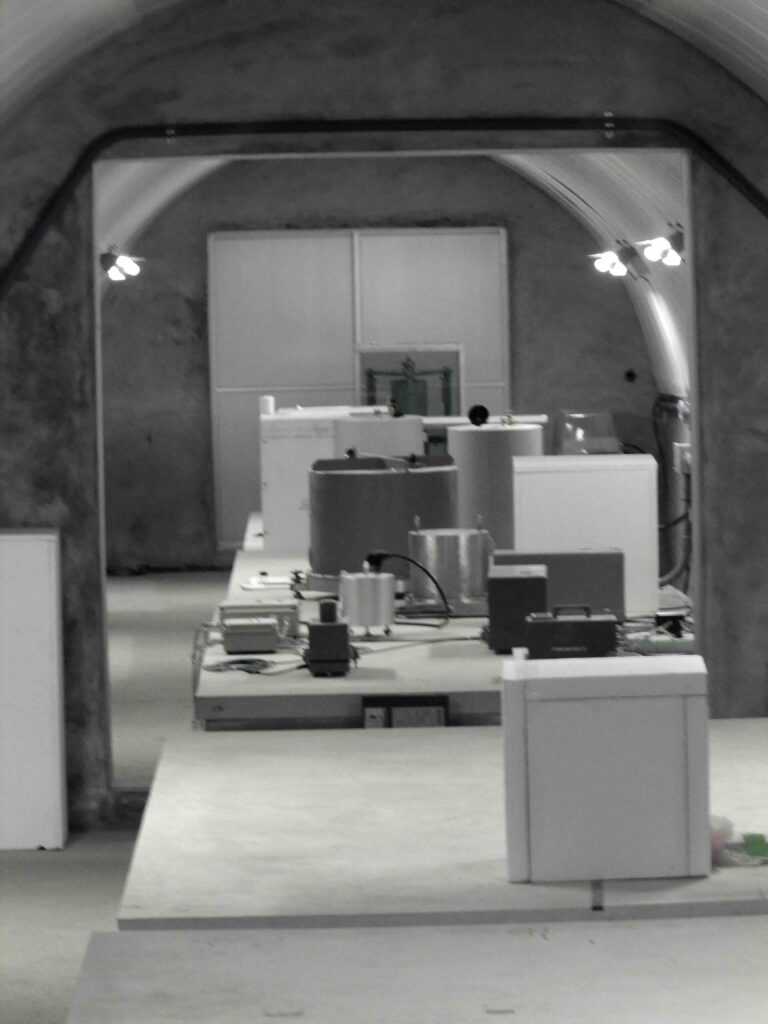
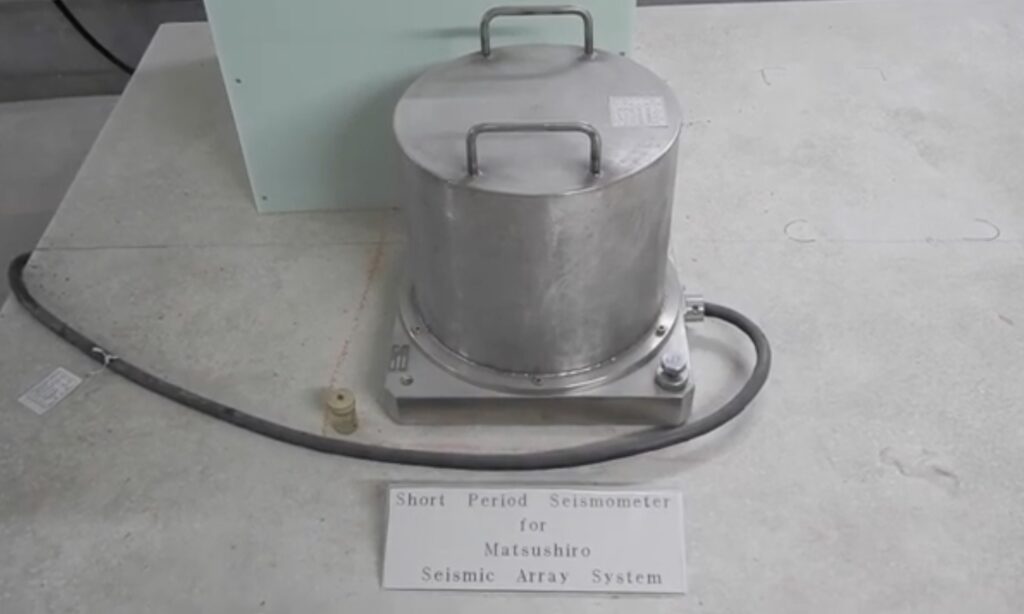

Video tour of Matsushiro below. Turn on Closed Captions to translate to your language.
Even more interesting is there is a very small signal on the vertical trace at exactly 4:38:45.
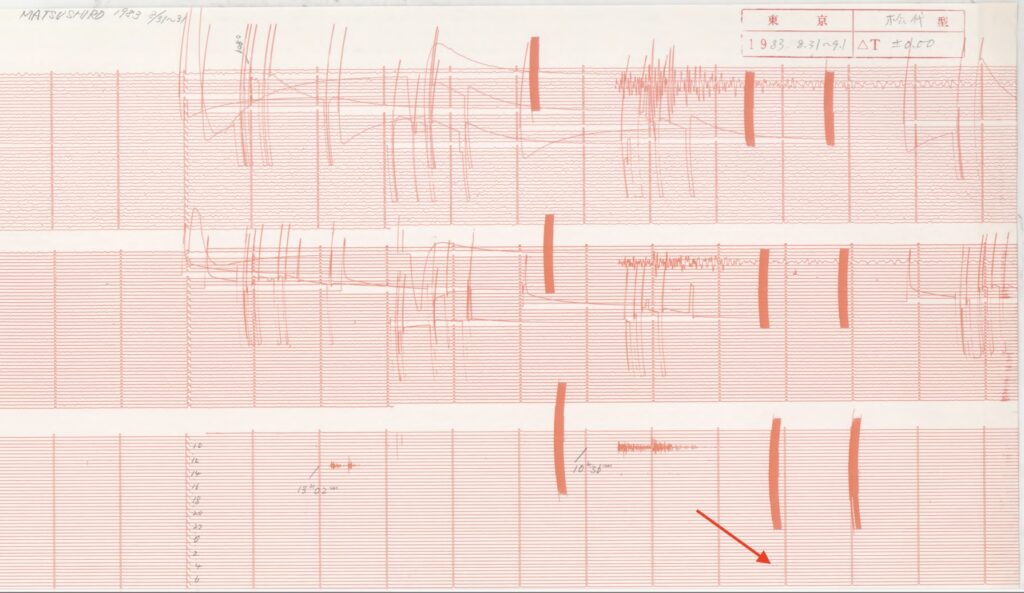

According to Brun, KAL007’s last radio transmission was at 4:13:16 and he believes it may have been the start of a mayday call. Whilst this small signal is plausibly from KAL007 impact it would need to be observed at other observatories to eliminate it as noise or a local event. It would take about 45 seconds for the arrival to arrive at Matsushiro so an impact time of about 4:38am. Whilst it is difficult to see, there appears to be two events separated by about 4 seconds.
If this is the first timing of KAL007 it shows that it was flying for about 25 minutes after its last radio transmission. This would mean KAL007 was in a semi controlled spiral descent, not a fall from the sky.
More importantly the rest of the seismogram shows the time of interest is a very quiet period seismically speaking. It also confirms the existence of paper records that are still being digitised. Hopefully HERP will return some positive news in relation to other records.
Another interesting discovery was that USGS – United States Geological Survey also runs a set of separate seismic equipment in these same tunnels and the seismograms are publicly available for download using a simple web based query. Type the following into any web browser “https://service.earthscope.org/fdsnws/dataselect/1/query?net=AS&sta=MAJO&loc=–&cha=SHZ&starttime=1983-08-31T15:00:00&endtime=1983-09-01T03:00:00” to download the seismogram. It is in UTC and you will need software or a python script to view the waveform. Ask AI to do it for you.

The short period vertical trace also shows an impulse event at the same time as the analog trace. Since two separate short period instruments registered an event at the same time it eliminates equipment noise. The USGS data is better resolution and it appears that the event has two clear arrivals. This can be also seen on the JMA smoked paper trace. This is a classic P & S arrival but since the P&S arrivals are only separated by 3 seconds it implies this is a local event approximately 25-40km from Matsushiro. (P&S waves travel at different speed and thus range can be estimated) Another observatory measurement from different location is needed to confirm if this is indeed a local event or something else.

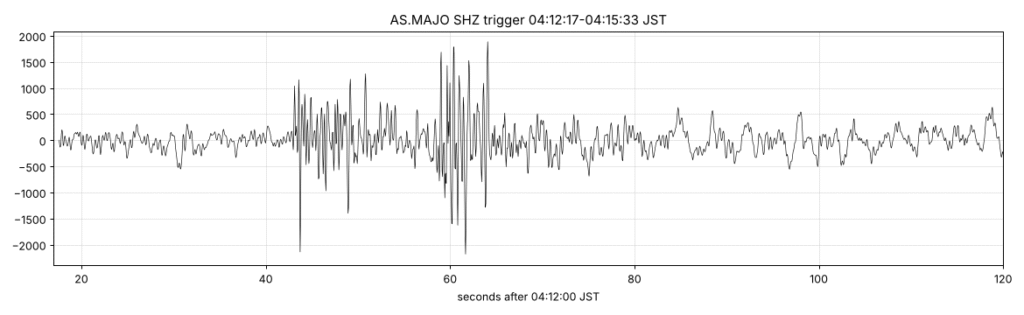

The USGS short period seismometer only records when it gets a trigger. The above graphs show the USGS short period vertical recorded the periods 04:12:17–04:15:33 JST
and 04:38:33–04:41:49 JST. i.e. there is a gap of about 23 minutes between 04:15:33 to 04:38:33. If KAL007’s last radio message was at 4:13:16 and something major happened a few seconds later (bomb/missile) and the plane fell out of the air from 35,000ft the quickest it would impact is about 50 seconds later..that would make an impact approximately 4:14 JST. We have the data to 4:15:33 with a signal around 4:12:42 with a dominant frequency of 2.9Hz and a secondary (possible shear) arrival with dominant frequency of 1.9Hz at about 16secs later. If this is a classic P&S arrival it infers a distance of around 130km. This is at the southern tip of Sado Island and doesn’t match flight path and debris drift.
There appears just background noise to the end of recording at 4:15:33. If we take Brun’s account of there Narita tape as verbatim the 4:12:42 arrival can’t be 007. The only conclusions that can be derived at 007 impacted after 4:15:33 but before 4:38:33 and the level of signal was too small to register.
| Recording starts (JST) | Background noise (counts) | Largest peak (counts) | Peak ÷ noise |
|---|---|---|---|
| 06:18:59 | 197 | 696 | 3.5× |
| 03:33:01 | 179 | 657 | 3.7× |
| 09:57:33 | 197 | 870 | 4.4× |
| 06:13:13 | 174 | 797 | 4.6× |
| For comparison, 04:38:33 | 227 | 4,624 | 20× |
So the system triggered on peaks of only about 650–700 counts, roughly 3.5 times the background noise. Anything clearly larger than that would have been recorded. A signal that slipped through would have peaked at less than about 600–700 counts.
2. What that means in ground motion
The station’s metadata gives SHZ a sensitivity of 1.0 × 10¹¹ counts per metre at 1 Hz. So, approximately:
- background noise: about 2 nanometres;
- trigger threshold: about 6–7 nanometres;
- the 04:38 event: about 46 nanometres.
A missed impact signal would therefore have been under about one-seventh the size of the 04:38 event.
Could the smoked paper have shown it? Assuming neither 4:12 or 4:38 event are KAL007 it means at Matsushiro the event is roughly 1/7 the size of the 4:38 event on the JMA smoked paper. This is less than the size of the pen width so not plausible to see on the continuous paper record. Only closer stations could plausibly see the signal.
Another possibility is Brun was wrong with the last radio message from KAL007. In his book 04:09:51, attributed by Brun to KE007: a short, partly garbled reply to KAL 050. 04:10:04, attributed by Brun to KE007: a transmission in Korean. 04:13:16: the cut-off “…ZERO FIVE ZERO, ZERO ONE FIVE…”. Brun himself is unsure whose call this was. He says it may have been KE007, or KE015. 04:13:51: KAL 050 tells Tokyo it is “unable to contact Korean Air zero zero seven this time”.
In a later chapter Brun writes that, “with the possible exception” of the 04:13 call, KE007’s transmissions at 19:09 and 19:10 GMT (04:09–04:10 JST) were its last. So on his own reading, without 04:13:16, KE007’s last call was 04:10:04 JST.
How that fits the 04:12 signal:
- arrivals at Matsushiro: 04:12:42.7 and 04:12:58;
- minus about 50–60 s of travel from west of Oga gives a source time of about 04:11:45–04:12:05;
- that’s about 1 min 40 s to 2 min after 04:10:04.
So another plausible explanation of the 4:12:42 and 4:42:58 arrival are two distinct impacts resulting from the plane separating into two main sections impacting 16 seconds apart. A smaller faster section (cockpit/nose section?) impacting first, followed by the main body/parts of wings. The frequency response matches this scenario. A faster smaller body would generate a higher (2.9Hz) frequency response than a slower/larger impact (1.9Hz).
Edit: Further examination shows another arrival at 0:55:49 that has almost identical character to the 4:12 arrival. This means it is far more likely to be a local small earthquake at a distance of about 125Km from Matsushiro, not an impact.
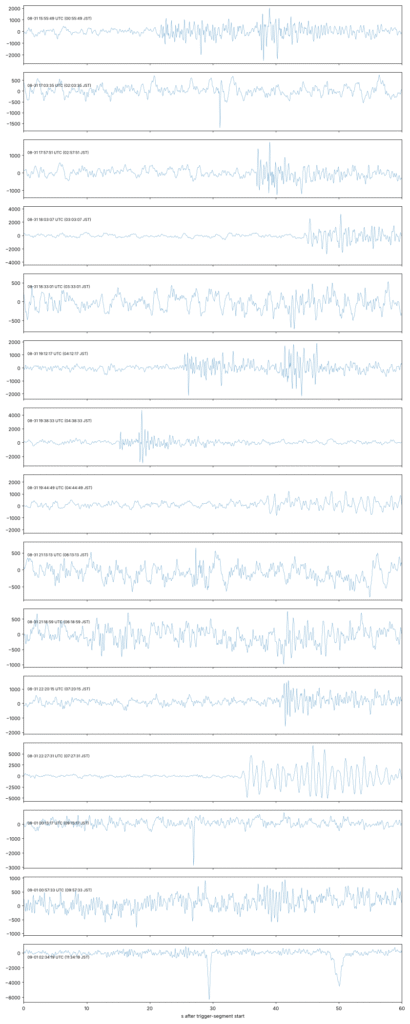
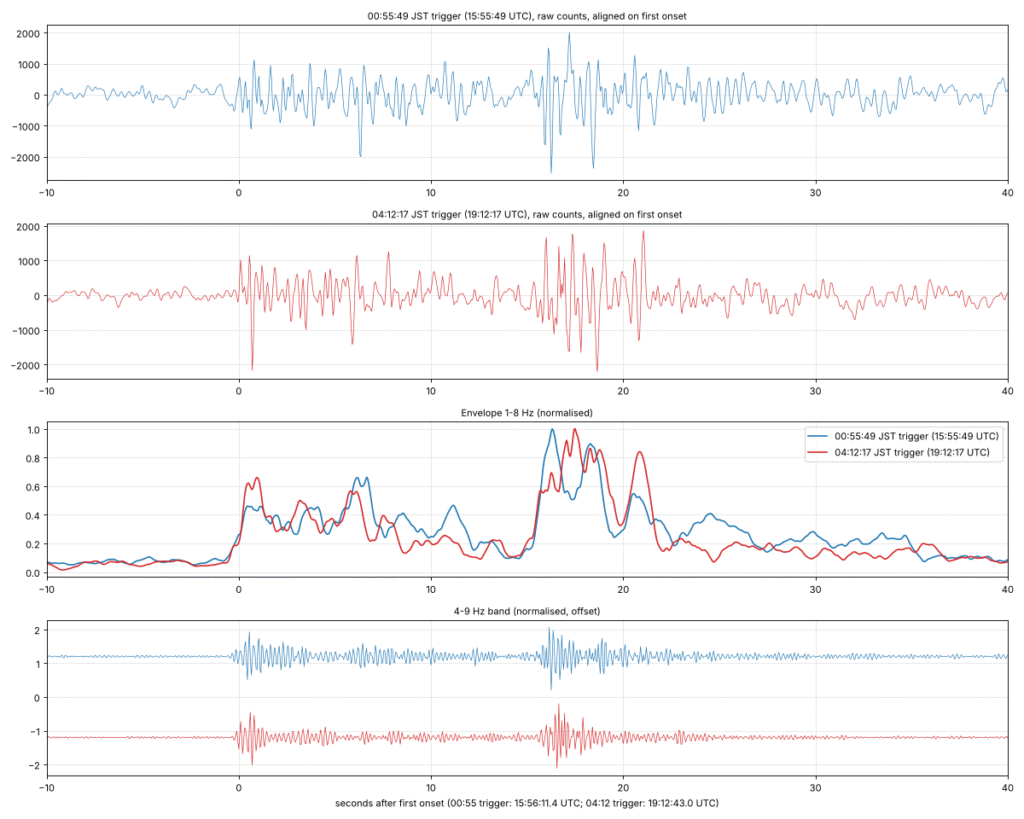
The only way to resolve this is to obtain a seismogram from another observatory.
Carnegie also ran an independent seismometer in the tunnels at Matsushiro. However this was a broadband seismograph designed by Selwyn Sacks in the 1960s. These were early broadband instruments with a response roughly from 30 s to ~30 Hz so unlikely to detect an impulse event. All 6 EHE, EHN, EHZ (high-gain short-period / broadband horizontal & vertical)EME, EMN, EMZ (medium-gain versions) seismograms are available but none show any noticeable event like the JMA and USGS. Below is the vertical short displayed in Japan time.
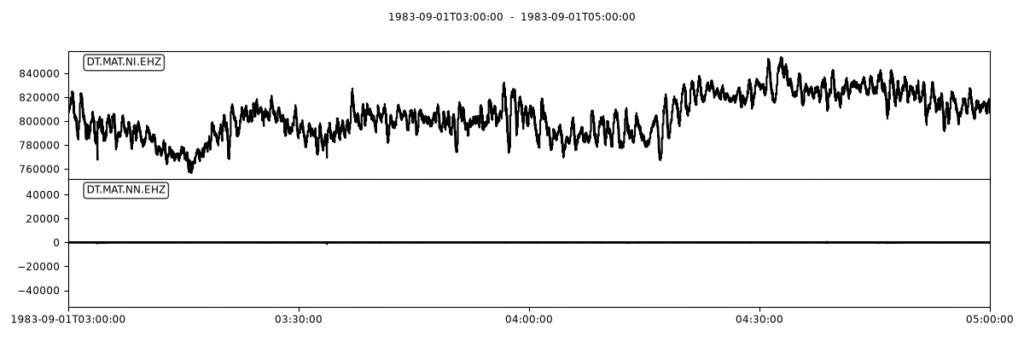
Carnegie also ran the same seismogram at KMU and magnetic tapes exist but it has not been digitised. Since it is broadband it is far less likely to see an impulse so retrieving these records is not a priority.
Since a plausible signal appears to be detectable at Matsushiro, it opens the number of potential observatories that may have recorded the event and kept archives. A clickable map of observatories of interest is here
Have just found out that MAT (Matsushiro), SEO (Seoul Korea) and SHK (Shiraki, Japan) have confirmed WWSSN Microfilm raw seismogram records stored at both ERI and BGS. MAT is a 4th independent seismogram operating in the Matsushiro tunnels that night. SEO and SHK observatories are far from ideal being 1045km and 797Km from the area of interest respectively. However, request has been put in for retrieval of these seismograms.
Out of curiosity I checked the MAJO seismogram for the period around events in Sakhalin. The seismometer only records when triggered so it is not continuous coverage. Only the period 3:33-3:36 is recorded. The long-period channels (LHN and LHE, recorded continuously) show nothing above background between 03:20 and 03:45.
| Recording window (JST) | Notes |
|---|---|
| 02:57:51 – 03:01:07 | |
| 03:03:07 – 03:08:01 | |
| 03:33:01 – 03:36:17 | ICAO official impact ‘about’ 3:38 |
| (nothing recorded 03:36 – 04:12) |
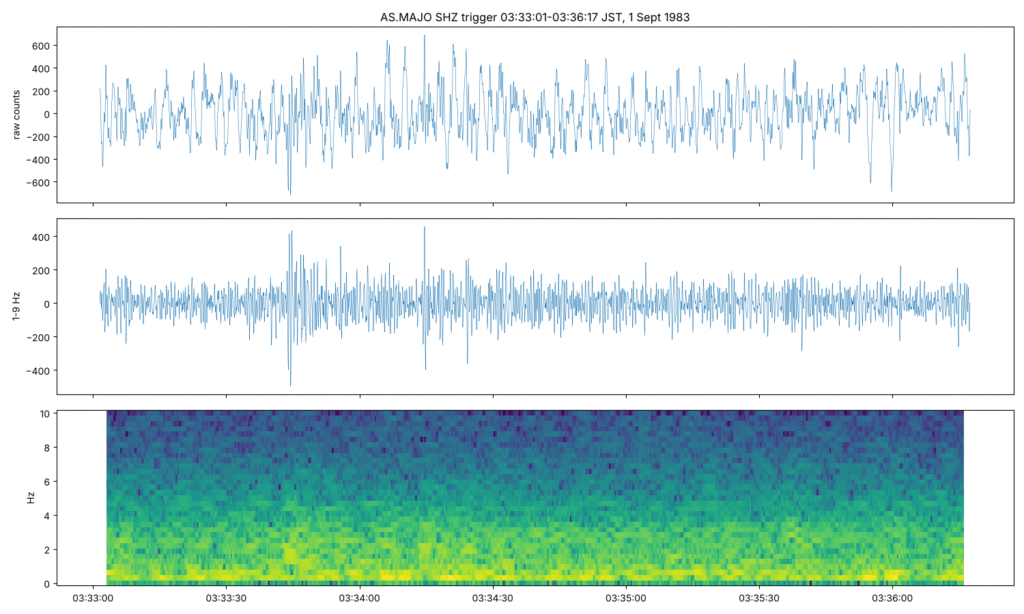


- 03:33:43.8: the largest arrival, followed by about 10 s of raised amplitude.
- 03:33:55.6: a small, sharp spike.
- 03:34:14.4: the second main arrival, 30.6 s after pick 1.
- 03:34:24.1: another small spike, 9.7 s after pick 3.
The two pairs are spaced almost the same: about 12 s from 1 to 2, and about 10 s from 3 to 4. That could mean each main arrival is followed by a repeated phase, or a second source behaving the same way. It could also just be chance in noisy data. If the two bursts are a P and S pair, a 30.6 s gap puts the source roughly 300–350 km from Matsushiro, with an origin time of about 03:33:00 JST. With only one station, not much more can be determined.