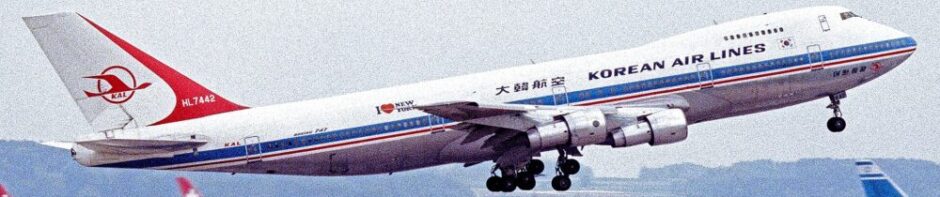
I visited Sai in June 2026. This was where a large amount of honeycomb debris washed ashore starting on Sept 13th, 1983. This was well documented in the newspapers at the time.
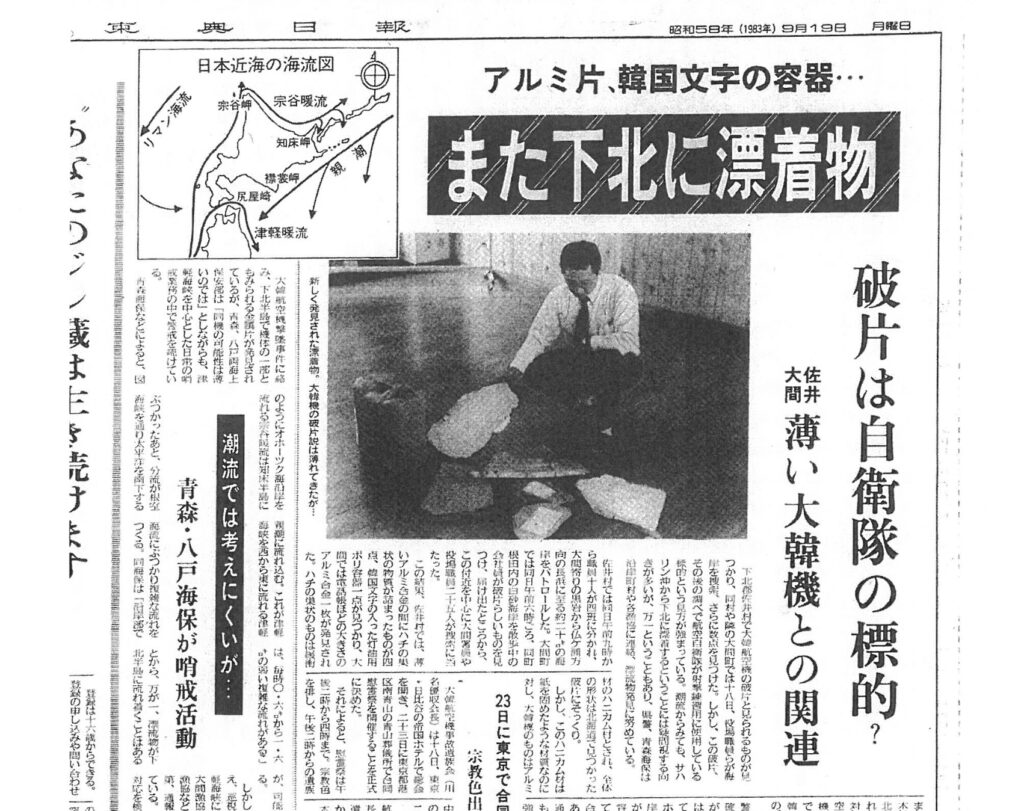
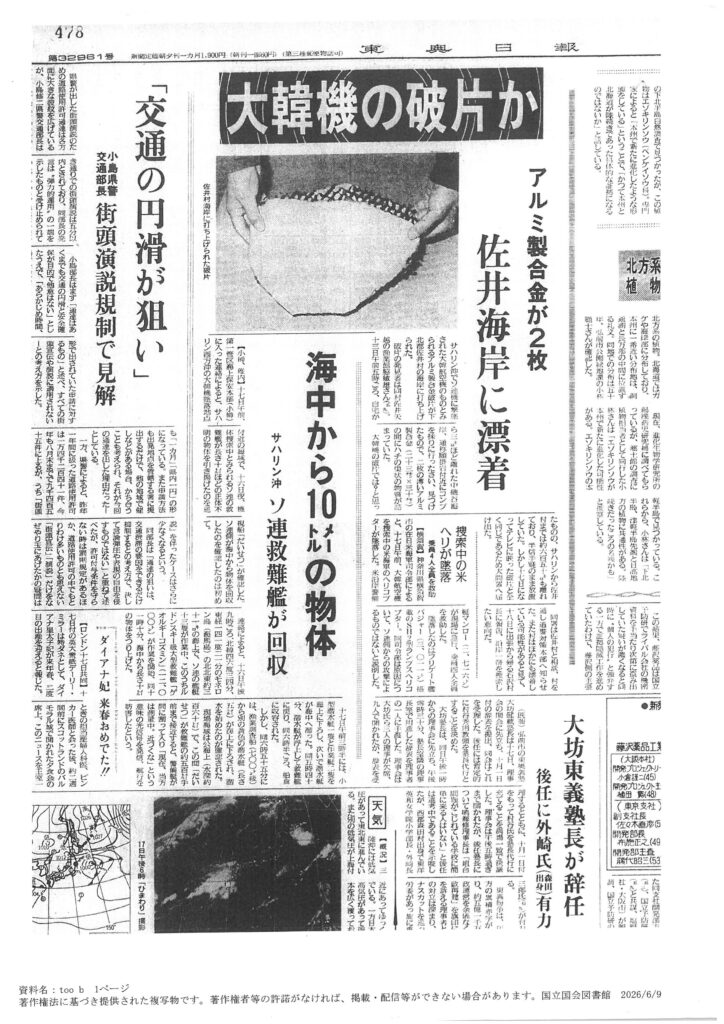
Michel Brun also found a number of pieces when he visited 8 years later. I had found honeycomb wreckage from the plane the year but much further south near Sakata so I was hopeful on repeating the luck. Sai was one of the few places I haven’t searched before.
I travelled from Sakhalin via ferry to Wakkanai. https://hayate.ru I am forever grateful to the Ceo of this ferry service, Daria who purchased my air ticket Bejing to Yuzhno with no money from me. I paid in cash back once in Sakhalin Without her help it was not possible to travel to Sakhalin. In future, as a foreigner I would travel to/from Sakhalin from Wakkani and pay cash for each leg.
From Wakkanai, I flew to Sapporo then slow train to Hakodate passing Chasu beach which is the only other piece of debris from KAL007 that has the exact time and place of arrival. That being 9am, Sept 16th as faithfully recorded by the local papers. Originally I planned a a few hrs stop here but my schedule and the train service did not allow this time.
*****. Insert picture of Chasu from train here.,
From Hakodate I took the bullet train under the Tsagaru strait, the longest tunnel in the world, to Aomori.
Sai is a very remote area of Japan with no train service so I hired a cute little 4WD truck in Aomori (the only vehicle the rental place had left). Very few tourists visit the area as there is very little accommodation available.
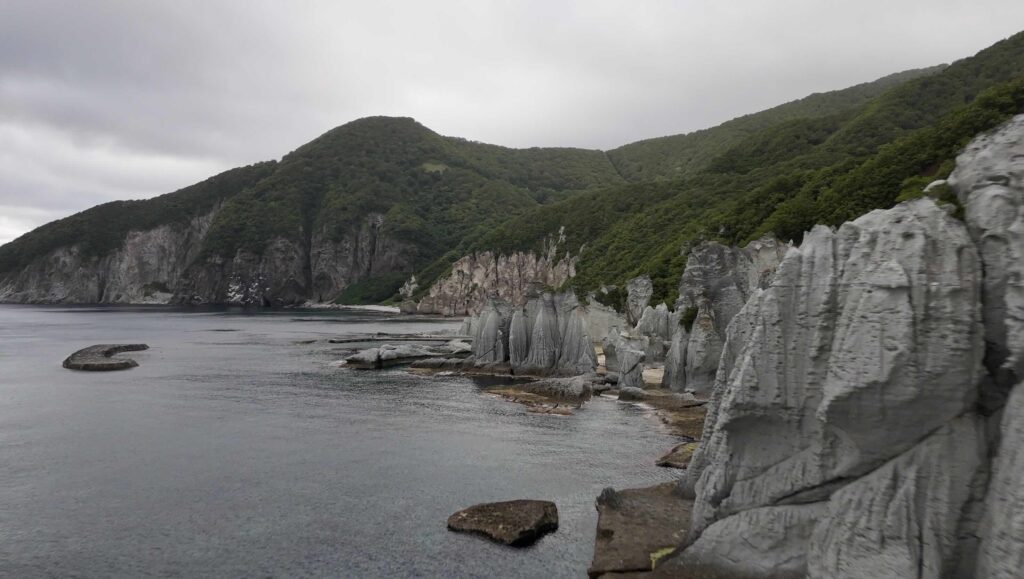
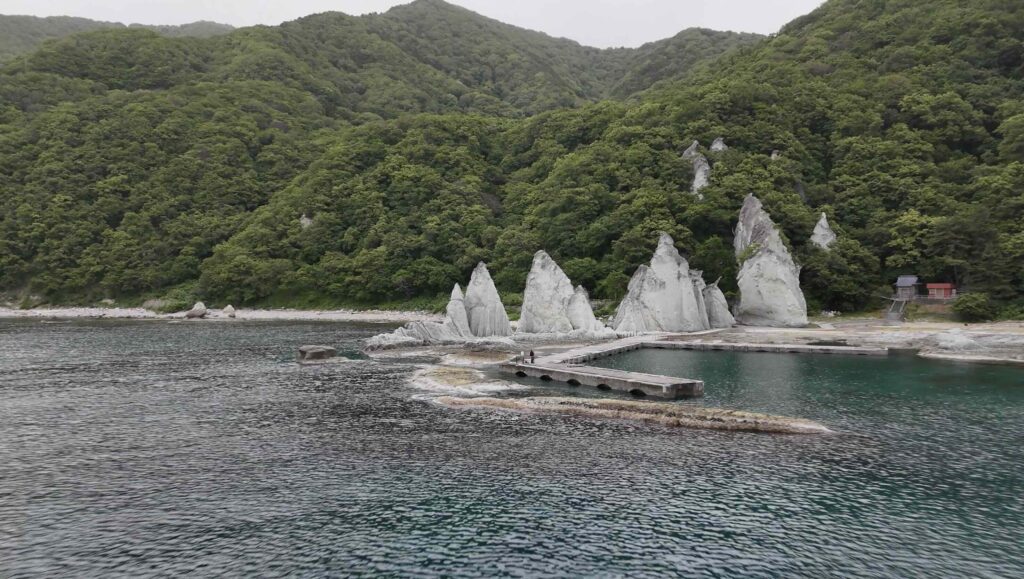
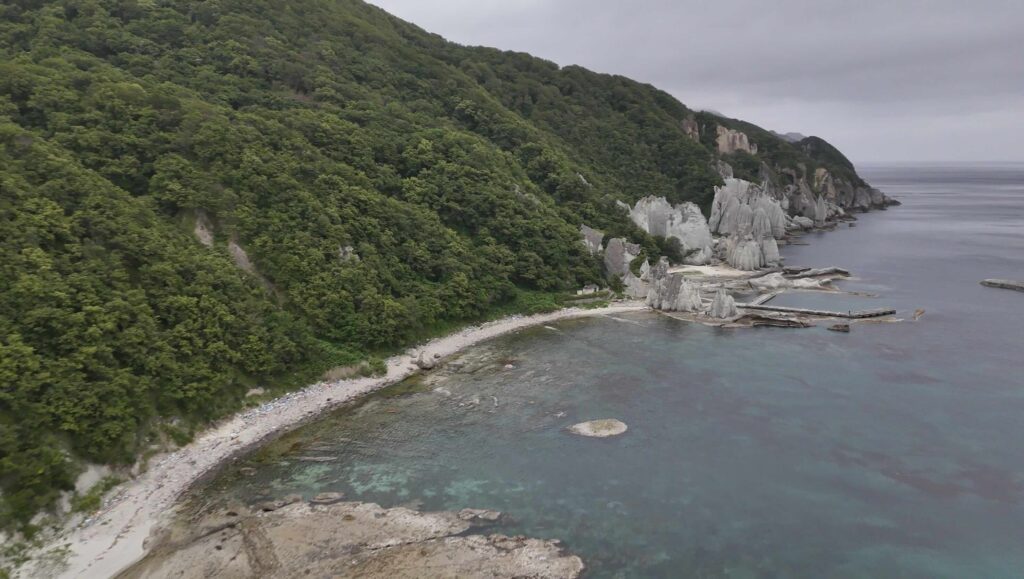
The area was very mountainous and the road very small and windy. The first place I came to was Hotoke-ga-ura rock formations. Brun had found two pieces of honeycomb at this spot.
There was no one else about but a very large bear warning sign. After just visiting Sakhalin I was well aware how big these bears can be and the fact that 238 Japanese had been killed by bears the previous year. There was a long walk down some wooden walkway and stairs to the ocean but I was greeted by spectacular rock formations. After a little drone flying I went beach combing. It was late in the day and I still had another 20 km to drive to Oma where my accommodation was.
As always for the western Japanese beaches, there was a mass of junk everywhere. There was also very thick foliage that covered much of the junk so I was not confident finding any honeycomb as it would be hidden by the plants. However, within just 5 minutes I came across a large piece of aircraft. It was too large to realistically carry so I just photographed it and returned to my vehicle.
Video of the find here
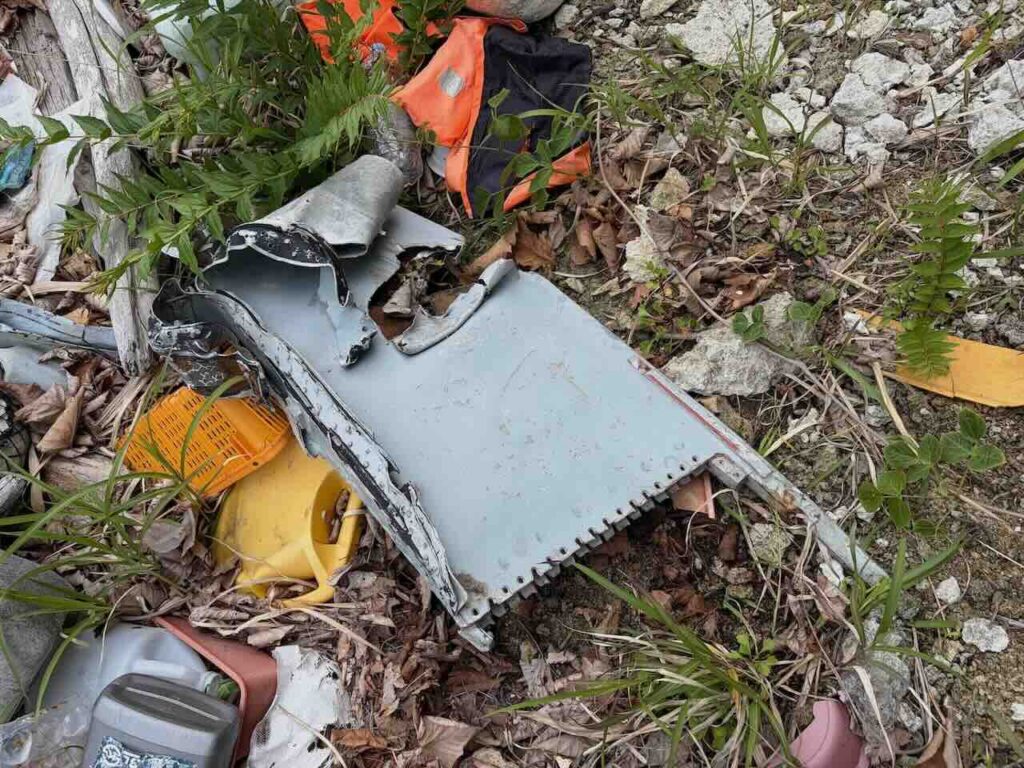
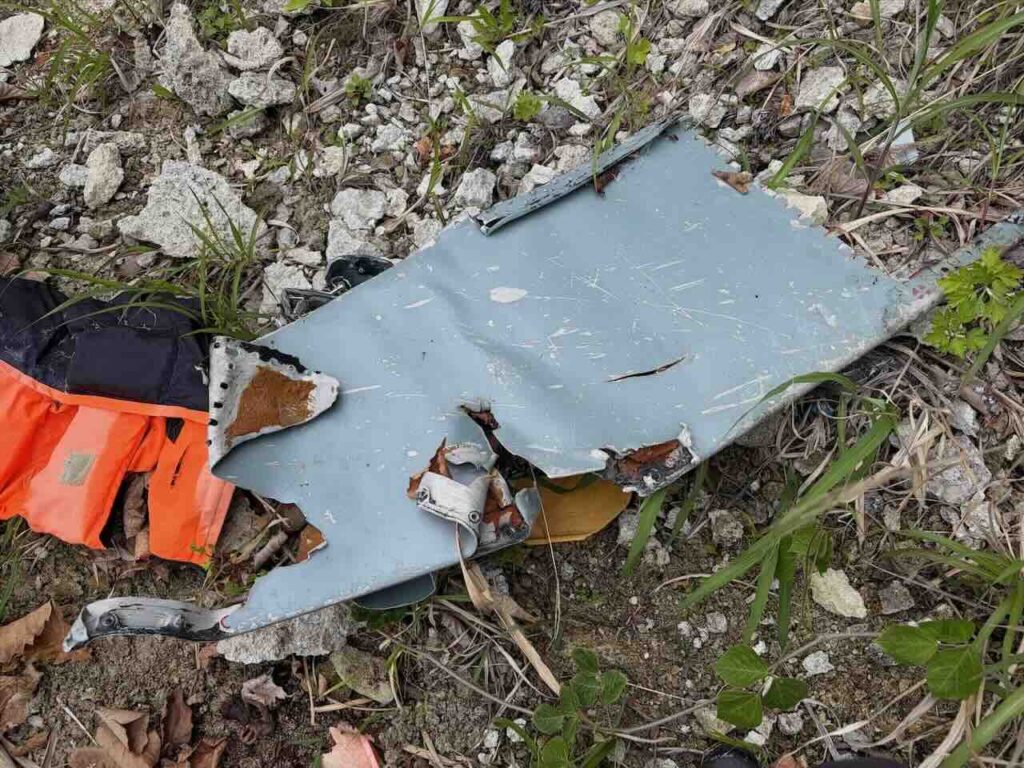
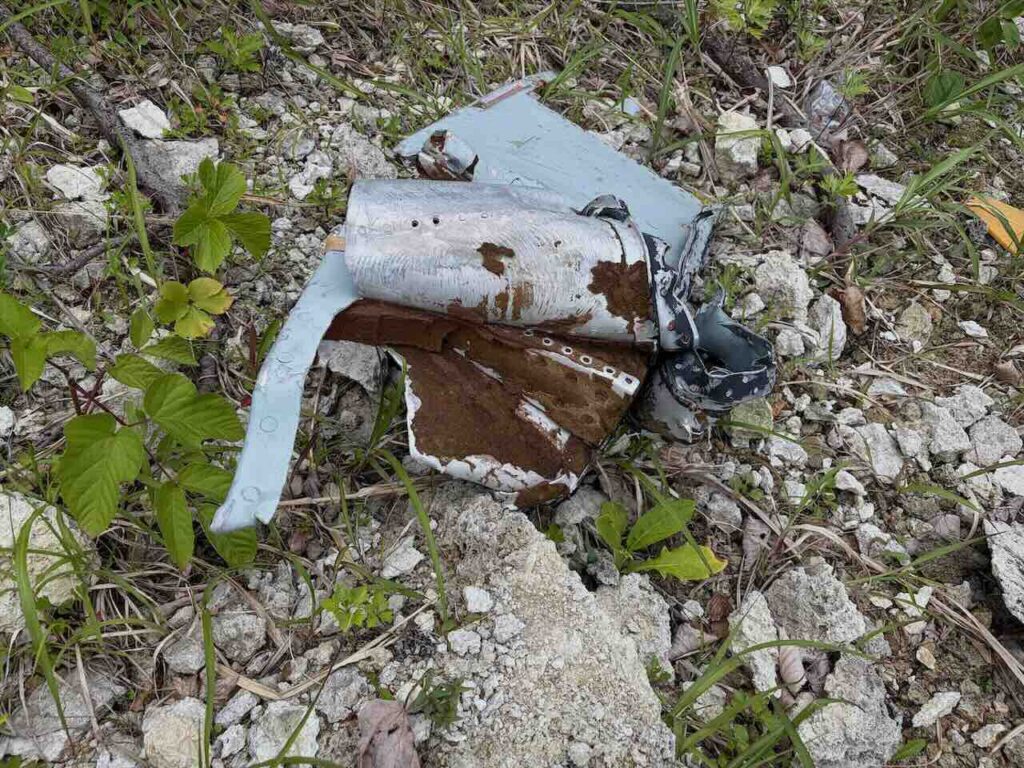
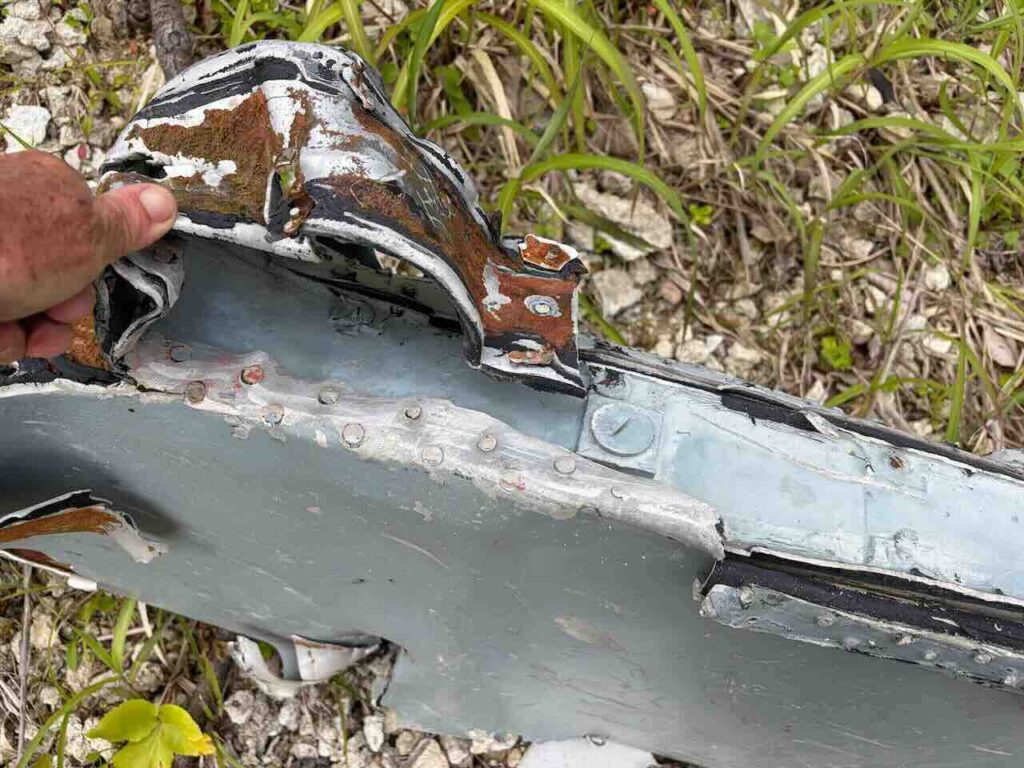
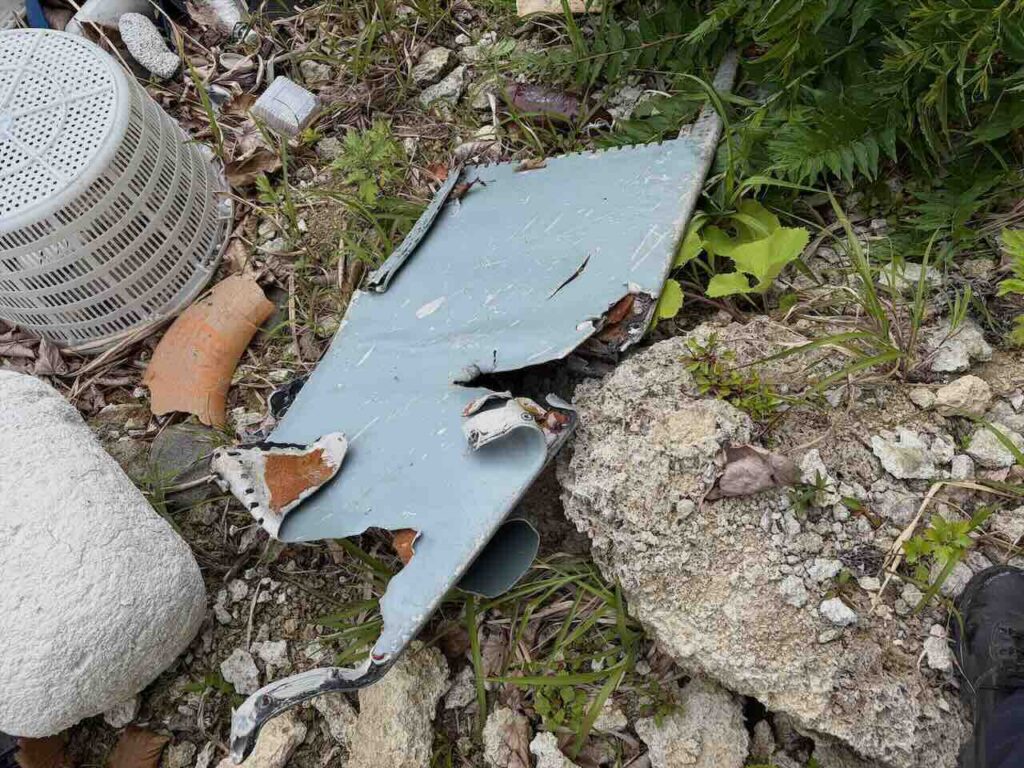
I uploaded the images and video to PPrune, an aviation forum to see if anyone could identify the wreckage. You can view the discussion here. So far no one has made any positive ID of what it could come from.
Since a debris from KAL007 washed up here it is plausible that it came from the plane. My best guess is it could be the outer tip of the horizontal stabiliser, an undercarriage door, or part of the engine pylon. If anyone knows what it is please send an email.
The large JMSDF Ōminato Naval Base is only 32km as the crow flies from this location. The colour of this wreckage matches something military so its also plausible it has nothing to do with KAL007.
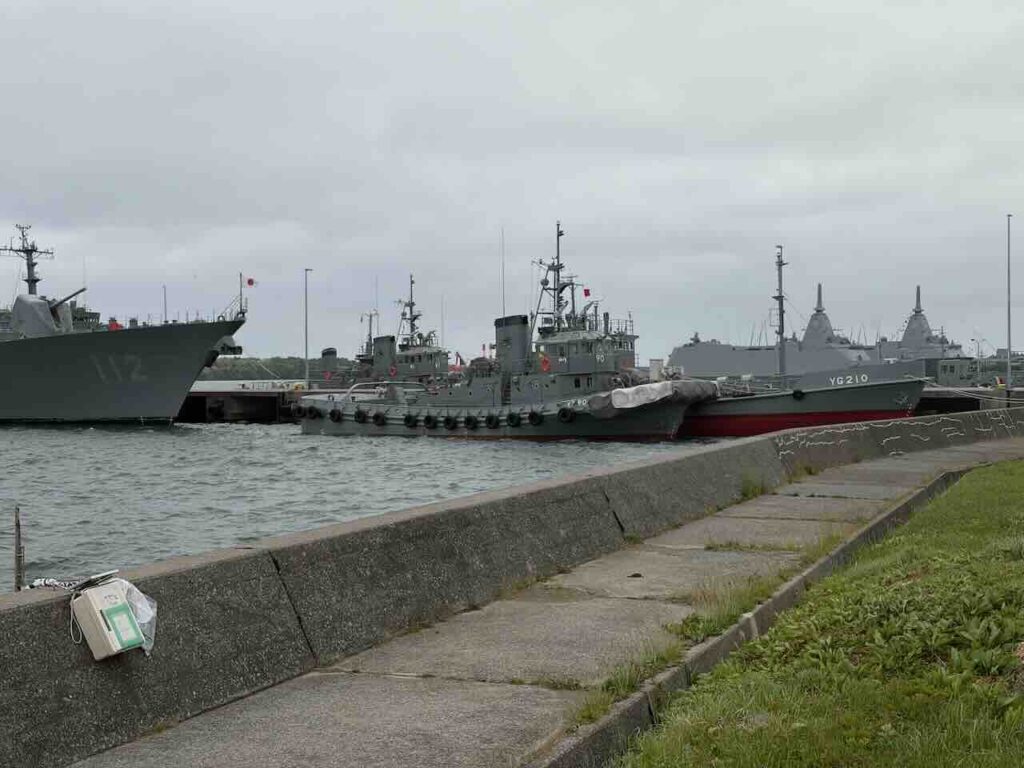
A few km north of the Hotoke-ga-ura rock formations was the place where on of the first piece of KAL007 washed ashore. This was found by the seaweed gatherer as described in the newspaper article above. Again it was quite a spectacular piece of coast.
Interesting both this early find and the Chasu beach find are very well documented with a lot of local content as you would expect from curious reporters. There is much discussion about how KAL007 debris could have arrived at this spot.
This contrasts sharply with the northern Hokkaido finds published extensively in the western media which have no local story. Very conveniently the wreckage found in northern Hokkaido has distinct markings of KAL007 “HL7442” but there is zero local context how this debris was found. The wreckage on the northern Hokkaido beaches, just “appeared” in the western press.
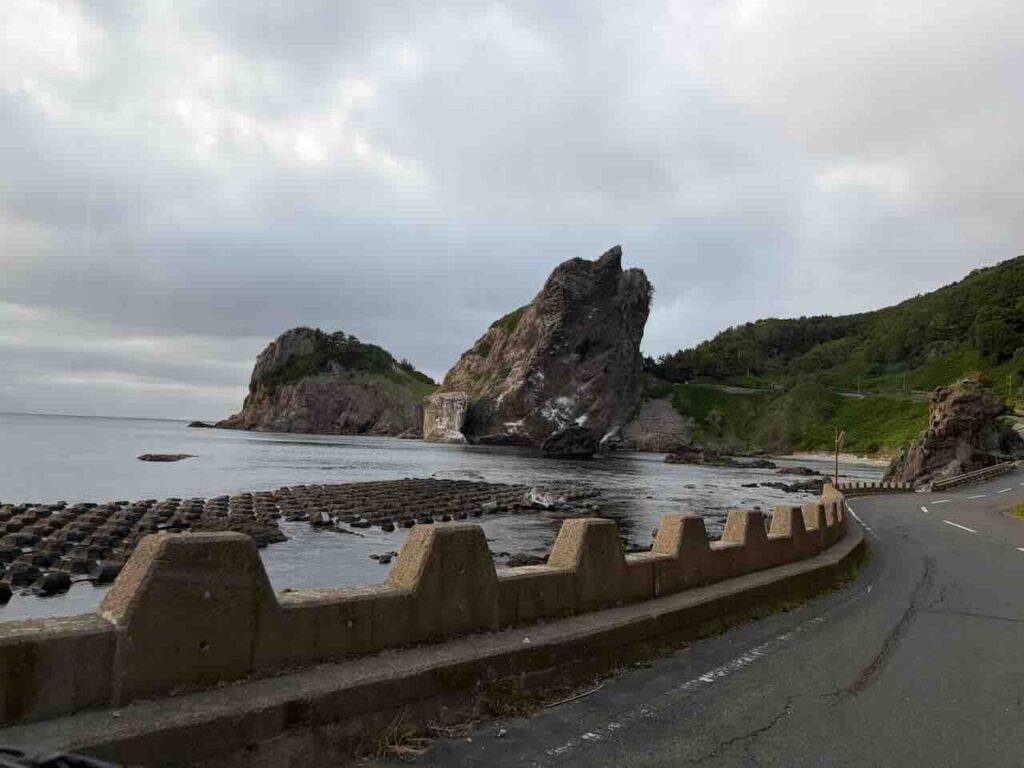
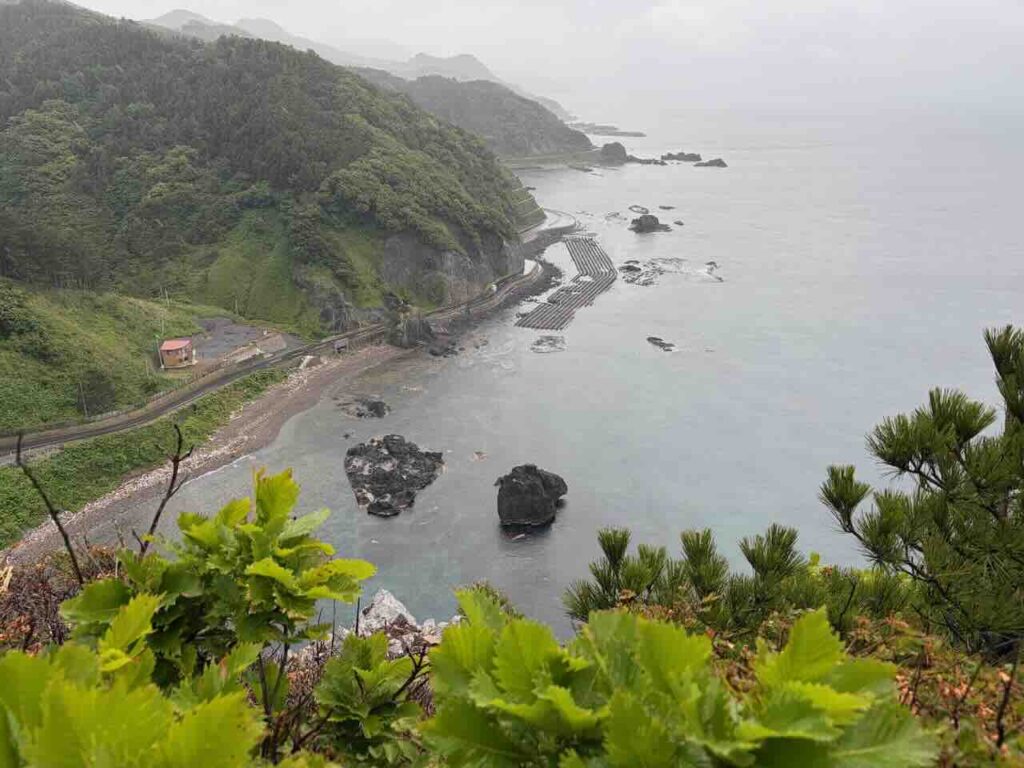
I searched the beaches here but found nothing. Again they were covered in great amounts of flotsam and jetsam so was easy to overlook things of interest.
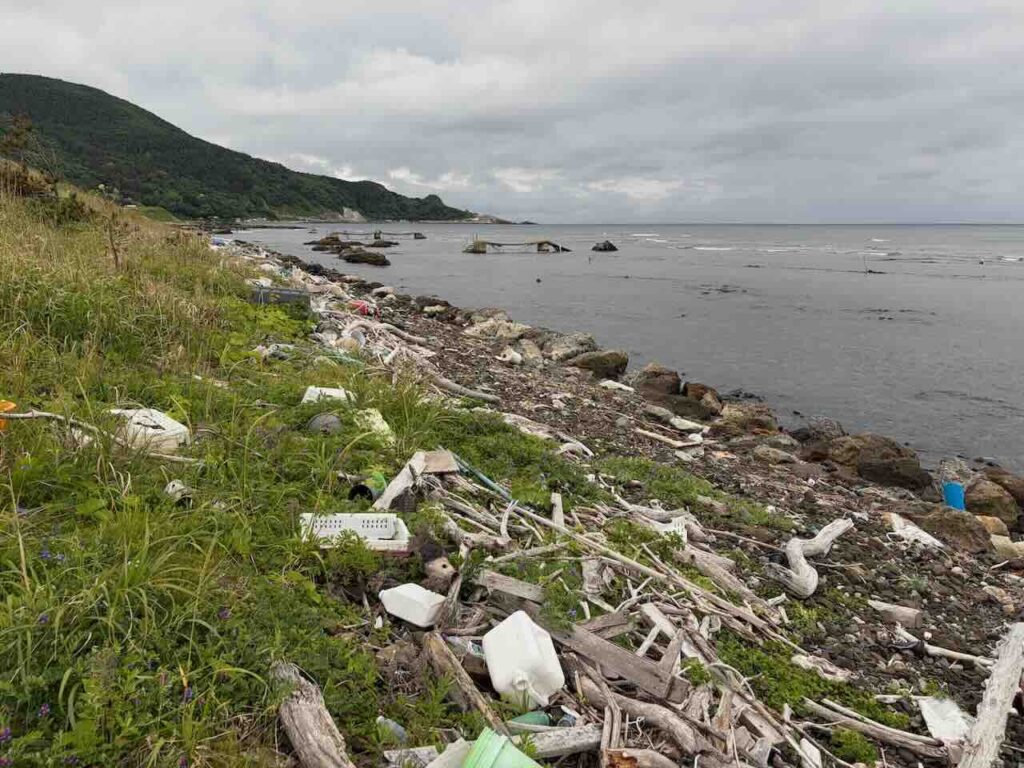
I was on a tight schedule so I left Sai, returned the rental vehicle in Aomori and caught the train to Sakarta in order to catch the ferry to Tobishima island the following day. This island is the closest land mass to where (according to Brun and I) KAL007 potentially came down. I had searched Awashima island years ago and found nothing but my debris drift calculations showed that debris was highly likely to have come ashore on the island. I had booked accomodation for the night at a lovely Ryokan and the plan was to search the beaches in the day and talk to the locals at night to see if they had collected any debris years ago.
Unfortunately when I went to board the ferry I was informed that due to rough weather today would be the only day they travelled to the island. There would be no service for another week.
Work in progress..check back soon..