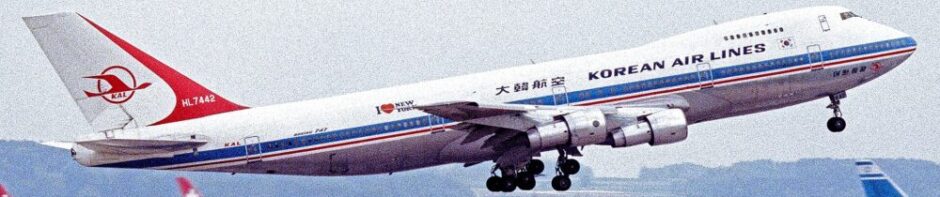
Part I, Izvestia 23rd January, followed by Part II 24th January 1991
By google translate. Please refer to original Russian text for any clarification or mis translation.
- Lieutenant Colonel Gennady Nikolaevich Osipovich is no longer serving in aviation. After an unsuccessful ejection, he was forced to retire. He now lives in a small town in southern Russia. Nearby, he received a plot of land where he grows strawberries… Finding him was not easy. But upon meeting, he (and this was a surprise) readily responded to our correspondent Nikolai Burbiga’s request to talk about that long-ago event. However, he warned: he would only speak about what he himself witnessed.
- 1983 was a tough year for us, Osipovich began his story. The Americans intensified their reconnaissance activities in our region. We were constantly forced to take to the air. The “RC-135” electronic reconnaissance planes were particularly annoying. I read the December Izvestia report “Seven Years After the Tragedy” about my story. So, your publication references the opinion of James Oberg, an American researcher of Soviet disasters. As a specialist, I found his judgments amusing. For example, this researcher claims that Soviet pilots could well have mistaken the South Korean plane for a reconnaissance “RC-135” aircraft. If that were the case, Oberg writes, it would only testify to our incompetence. Supposedly, on radar, KAL-007 was moving at a much higher speed than a typical “RC-135.” Moreover, it flew straight, whereas “RC-135s” usually trace “figure eights.”
- Let’s sort this out: are we really such poor pilots, village fools—what are these “figure eights” about? Believe me, I’ve seen plenty in the Sakhalin sky and can assert that “RC-135s” fly along our border and are capable of receiving signals from our radars as well as intercepting radio exchanges from ground stations. But in calm times, not all radars are operational. So how did the Americans proceed in such cases? Their pilots resorted to trickery, performing these very “figure eights” that Oberg mentions. Here’s how it happens. The reconnaissance plane heads toward our airspace, violates it, forcing our radars to activate… and then immediately turns back. Thus, the sought-after “figure eight” emerges.
- Yes, it was a constant game—a nerve-wracking game. Over ten years of service in the Far East, I carried out more than a thousand interception flights. We knew the tail numbers of the violators. And they knew ours. Once, an officer from my regiment, returning from leave, took off on an intercept. Suddenly, he hears: “Hello, Nikolaev. Where did you vacation?…”
- Well, in April 1983, an unpleasant incident occurred. Taking advantage of a “carryover”—when fog from the sea moves inland and then, as the sun warms, retreats back to the sea—the Americans, violating our airspace, circled Green Island for fifteen minutes.
- On August 16, I returned from leave to Sakhalin, to the Sokol settlement, where our unit was based.
- (Allow me a brief author’s digression. The airfield located there has been mentioned more than once by foreign specialists studying the “Boeing” history. Its existence remains a secret today only for military censorship, which struck out the word “Sokol” in our first December publication. And it was “declassified” at least by the fact that several years ago, during the repair of the Yuzhno-Sakhalinsk civilian airport, the military graciously allowed Aeroflot to use “Sokol.” And thousands of passengers—including your correspondent—flew to and from Sakhalin precisely from the runway where combat aircraft stand in caponiers or simply in the open, also, by the way, of long non-secret brands.)
- Around 4:30, I got up to check the guard. I had just dressed when the phone rang! Lieutenant Astakhov picked up, listened, and mumbled something incoherent to me. Finally, I made out: “They say, it’s readiness number one for you.”
- I headed to the plane, thinking on the way: “Why was readiness assigned to me? There’s already a young pilot on standby…”
- But nevertheless, I quickly took my place in the cockpit and reported it.
- January 23, 1991
- — What were you thinking at that moment?
- Nothing. It was excitement! And later, no matter how much they asked me to reconstruct everything that happened in the sky second by second, I couldn’t recall the details.
- What is a fighter pilot? It’s like a sheepdog constantly trained to go after a stranger. I saw that the stranger was ahead. I’m not a traffic cop who can stop a violator and demand documents! I was following to intercept the flight. The first thing I had to do was land it. And if it didn’t comply, neutralize it at any cost. I couldn’t have had any other thoughts. Everything else I heard afterward was lyricism. And nothing more.
- So, approaching, I locked it with my radar sight. The missile capture indicators immediately lit up.
- The foreign plane’s speed was around a thousand kilometers per hour; mine was higher. I had to match speeds. Hovering at a distance of thirteen kilometers, I reported: “Target in capture. I’m following it. What to do?”
- Let’s pause the pilot’s story here and again give the floor to our New York correspondent Alexander Shalnev. He sent the editorial office a document that has not yet been published in our country, though it was presented to the world public more than seven years (!) ago. It’s about a recording of the conversations between the pilots of Soviet interceptors dispatched to intercept the South Korean “Boeing.” According to our information, this recording was made by Japanese defense forces. The conversations between the pilots of three Su-15s, one MiG-23, and the airbase dispatchers were overheard and later disseminated in a transcript in Russian and English. True, for some reason, parts of the recording are missing. However, as Jean Kirkpatrick, the U.S. representative to the UN, once claimed, “nothing was cut from the recording. This recording was made on a voice-activated device and therefore covers only the period when conversation was audible.”
- They gave me a course toward the sea. I quickly climbed to the indicated eight and a half thousand meters and set off. For some reason, I was convinced they were testing us. Training us. And they called me up as the most experienced.
- At that time, Osipovich continues his story, the regiment was transitioning to MiG-23 and MiG-31 aircraft. There were few pilots left. I still had a few days of leave, but the commander asked me to return early, before the term ended.
- After that incident, a commission flew to the regiment and gave us a severe reprimand. They chewed us out! After the commission left, the regiment commander tallied everything and said: if an air battle occurs over the Kurils, you won’t make it back home. So, we’ll guide you to the nearest land so you can eject there.
- The psychological tension from such conversations, naturally, grew. For several weeks, we hung cannons and waited. Only by June did the passions subside. The regiment doctor insisted I take leave; the workload was taking its toll. All that time, I was either flying intercepts or directing flights, as I was the deputy regiment commander.
- (To be continued. Beginning in Nos. 18, 19)
- …money, but the debt was not fully repaid.
- You don’t need to be a banker from the City to understand the basics. Any businessman in England, as a rule, does not have free cash on hand. When investing money somewhere, they immediately borrow…
- …this object was ‘declassified’ at least by the fact that several years ago, during the repair of the Yuzhno-Sakhalinsk civilian airport, the military graciously allowed Aeroflot to use ‘Sokol.’ And thousands of passengers—including your correspondent—flew to and from Sakhalin precisely from the runway where combat aircraft stand in caponiers or simply in the open, also, by the way, of long non-secret brands.”
- Over four flight shifts, I “got into the groove” (settled into the job) and requested night flights. I found it convenient to be on duty at night. Especially since on September 1, I was invited to the school where my son was in first grade and my daughter in eighth grade. I needed to give a talk at a peace lesson.
- As usual, I took up duty on August 31. I was the senior officer and assigned myself to the third readiness level. The first level means the pilot is in the plane. The second means dressed in a suit. The third allows being out of the suit but requires occupying the plane within ten minutes in case of an alert.
- I took over the duty and reported to the higher-ups. Then we had dinner. I watched TV and dozed off.
- …the company he created, “Soviet-Anglo Technology Limited,” operates. And its troubles arose not due to the commercial sluggishness of the English partner, but for an entirely different reason. We still hold onto the once-established notion of capitalist “sharks” ready to “devour” those dealing with them. In the story I’m now recounting, we must turn to our own homegrown “pikes,” who, upon closer inspection, turn out to be far more dangerous than their “sharks.”
- They confirmed the order to be on standby.
- Time passed, and no new commands came. Suddenly, I noticed: another plane was being uncovered. What’s this? Usually, the Americans started stirring after eleven, but this was too early for them…
- Eight minutes into the flight. Suddenly, the navigation officer transmits:
- “Target ahead: an aircraft violating the flight regime. Approaching head-on.”
- However, the PPS (front hemisphere) for some reason didn’t guide my plane toward this target. Soon, I received a new command:
- “We’ll guide the rear hemisphere.”
- There was no choice. I turned onto a reverse course. And, receiving altitude corrections, I followed the violator. The weather was normal then. Through sparse clouds, I soon spotted the intruder aircraft. What does “spotted” mean? I discerned a point ahead, two to three centimeters in size. Its flashing lights were on.
- At six o’clock (local time, of course), I was finally given the “air” command. I started the engine, turned on the headlight since the runway wasn’t yet lit, and began taxiing.
- …I was confirmed to be on standby.
- Time went by, no new commands came. Suddenly, I see: another plane is being uncovered. What’s this? Usually, the Americans started stirring after eleven, but this was too early for them…
- Eight minutes into the flight. Suddenly, the navigation officer transmits:
- “Target ahead: an aircraft violating the flight regime. Approaching head-on.”
- However, the PPS (front hemisphere) for some reason didn’t guide my plane toward this target. Soon, I received a new command:
- “We’ll guide the rear hemisphere.”
- There was no choice. I turned onto a reverse course. And, receiving altitude corrections, I followed the violator. The weather was normal then. Through sparse clouds, I soon spotted the intruder aircraft. What does “spotted” mean? I discerned a point ahead, two to three centimeters in size. Its flashing lights were on.
- …My Birmingham acquaintance belongs precisely to this category of businessmen. For several years now, in the city on the Neva…
- They confirmed the order to be on standby.
- Time passed, and no new commands came. Suddenly, I noticed: another plane was being uncovered. What’s this? Usually, the Americans started stirring after eleven, but this was too early for them…
- Eight minutes into the flight. Suddenly, the navigation officer transmits:
- “Target ahead: an aircraft violating the flight regime. Approaching head-on.”
- However, the PPS (front hemisphere) for some reason didn’t guide my plane toward this target. Soon, I received a new command:
- “We’ll guide the rear hemisphere.”
- There was no choice. I turned onto a reverse course. And, receiving altitude corrections, I followed the violator. The weather was normal then. Through sparse clouds, I soon spotted the intruder aircraft. What does “spotted” mean? I discerned a point ahead, two to three centimeters in size. Its flashing lights were on.
- But the navigation officer suddenly started questioning me: the target’s course, altitude… Though it should have been the other way around! Only later did it turn out: we were both in a blind zone, the existence of which we didn’t even suspect…
- For some time, we couldn’t see each other, nor could he see me, the navigation officer explained to me on the ground.
- Finally, we approached Sakhalin. Then the navigation officer commands:
- “The target has violated the state border. Destroy the target…”
- But even if, for some reason, commands from the ground weren’t audible, the pilots’ reactions can give an idea of what those commands were.
- Should I activate the special system?
- Understood.
- 163.He needs to drop the suspensions.
- Yes, it turned around.
- The target is to my left at 80 already.
- Understood. It’s going with flashing lights, with flashing lights.
- The target’s course remains 240.
- Executing.
- I’m in capture. Target course 240.
- Repeat the azimuth.
- 1001 from “Carnival.” Azimuth 45, distance 60?
- “Deputy” is observing me.
- “Deputy” is asking: do you see the target or not?
- Do you see it?
- Are you asking 805?
- Who’s asking 805?
- I see it.
- “Carnival” doesn’t see it.
- A.N.O. says the flashing light is on.
- Understood. I’m at 7.5, on course 230.
- I’m closing in on the target.
- Time won’t run out.
- “”. I’m behind the target at a distance of 25, do you see it?
- Darn it, I’m going, so my fuel gauge is already on.
- Need to approach it.
- I’m turning on capture, approaching it.
- At some point in these conversations, instead of our ellipsis, it was Gennady who received that very command “Destroy the target.”
- However, after that UN Security Council session, experts (including American ones) repeatedly expressed doubts about how accurately the recording of the conversations was transcribed and reproduced in the Russian transcript. Moreover, there was no consensus on the meaning of some terms encountered in the transcript. The main issue was the “flashing light.” What did the pilot of our fighter mean when he said the “target has a flashing light”? After all, the official Soviet version was that the “Boeing-747” was flying with no identification lights at all…
- Of course, it would be important to publish our own, Soviet transcript, made from our own recording—including, in particular, what the dispatchers said. To publish it along with comments from those who fully understand the meaning of every syllable, each…
- 23 January 1991
- Lieutenant Colonel Gennady Nikolaevich Osipovich no longer serves in the Air Force. After an unsuccessful ejection, he was forced into the reserves. He now lives in a small town in southern Russia. He received a plot of land nearby and grows strawberries there. Finding him wasn’t easy. But when we met (and this was unexpected), he readily responded to our correspondent Nikolai Burbyga’s request to recount that long-ago event. But he warned: he would only speak about what he witnessed himself.
- “1983 was a difficult year for us,” Osipovich began his story. “The Americans stepped up their reconnaissance activities in our area. We were constantly forced to take off. The RC-135 electronic reconnaissance aircraft were especially annoying. I read a report in the December Izvestia newspaper, “Seven Years After the Tragedy,” about my story. Your publication includes a reference to the opinion of James Oberg, an American researcher of Soviet disasters. As a specialist, I found his judgments amusing. For example, this researcher claims that Soviet pilots could easily have mistaken the South Korean aircraft for an RC-135 reconnaissance aircraft. If this were the case, Oberg writes, it would only demonstrate our incompetence. He claims that on radar, the KAL-007 was moving at a much higher speed than a typical RC-135. Moreover, it was flying in a straight line, while the RC-135 usually makes figure-eight turns.
- Let’s figure it out: are we really such lousy pilots, village idiots? What kind of “eights” are these? Believe me: I’ve seen plenty in the Sakhalin skies and I can confirm that RC-135s fly along our border and are capable of receiving our radar signals, as well as intercepting radio traffic from ground stations. But not all radars are operational during quiet times. What did the Americans do in such cases? Their pilots resorted to trickery, performing those very “eights” Oberg talks about. And it happens like this: a reconnaissance aircraft flies toward our airspace, violates it, triggering our radars… and then immediately turns back. Out comes the sought-after “eight.”
- Yes, it was a constant game of nerves. During my ten years of service in the Far East, I flew over a thousand sorties to intercept them. We knew the tail numbers of the violators. And they were ours. One day, an officer in my regiment, returning from leave, flew out to intercept. Suddenly, he heard: “Hello, Nikolaev. Where were you vacationing?…”
- And then, in April 1983, an unpleasant incident occurred. Taking advantage of the “carryover”—a period when fog rolls in from the sea and then, when the sun warms, retreats back to the sea—the Americans violated our airspace and circled Zeleny Island for fifteen minutes.
- After that incident, a commission arrived at the regiment and gave us a dressing down. We were really pumped up! After the commission left, the regiment commander tallied everything up and said: if there’s an air battle over the Kuril Islands, you won’t make it home in time. So we’ll be escorting you to the nearest land so you can eject.
- The psychological tension understandably increased from such conversations. For several weeks, we hung up the guns and waited. And only by June did the tension begin to subside. The regiment doctor began insisting that I take leave: the strain was taking its toll. All this time I was either flying interceptions or directing flights, since I was the deputy regiment commander.
- On August 16th, I returned from vacation to Sakhalin, to the village of Sokol, where our unit was stationed.
- (I’ll allow myself a brief digression. The airfield located there has been mentioned more than once by foreign experts researching the history of the Boeing. Its existence remains a secret today only to the military censors, who crossed out the word “Sokol” in our first publication in December. And the “declassified”
- “Tilo” is already a landmark for the fact that several years ago, during renovations to the civilian airport in Yuzhno-Sakhalinsk, the military graciously allowed Aeroflot to use the Sokol. Thousands of passengers (your correspondent included) flew in and out of Sakhalin from the runway, near which military aircraft were parked in caseniers and simply in the open. Incidentally, these were also no longer classified models.
- At that time, Osipovich continues, the regiment was transitioning to MiG-23s and MiG-31s. There were few pilots left. I still had a few days of vacation left, but the commander asked me to leave early, before my leave was up.
- After four flight shifts, I “got into the swing of things” and asked to fly night flights. It was convenient for me to be on duty at night. Especially since on September 1st, I was invited to the school where my son was in first grade and my daughter in eighth. I had to speak at a peace lesson.
- As usual, I reported for duty on August 31st. I was the senior officer at the time and assigned myself to third readiness. First readiness is when the pilot is seated in the plane. Second readiness is when he’s wearing a suit. And third readiness is when you’re allowed to be without a suit, but if necessary, you must take your seat on the plane within ten minutes.
- I took over the duty and reported upstairs. Then we had dinner. I watched TV and dozed off.
- Around four-thirty, I got up to check the guard. The bell rang just as I was getting ready! Lieutenant Astakhov picked up the phone, listened, and mumbled something inaudible to me. Finally, I made it out: “Your readiness number one,” he said.
- I walked toward the plane, thinking as I went: “Why was I given the readiness status? After all, there’s a young pilot already on standby…”
- Nevertheless, I quickly took my place in the cockpit and reported.
- They gave me a heading—sea. I quickly climbed to the indicated eight and a half thousand meters and started sloshing around. For some reason, I was just a distraction. To train us. And I was the most experienced.
- Eight minutes had already passed in the flight. Suddenly, the flight navigator reports:
- “Target ahead: aircraft intruding on a collision course.”
- However, the forward hemisphere (FH) doesn’t direct my aircraft to this target for some reason. Soon, I receive a new command:
- “We will direct the rear hemisphere.”
- There’s nothing else to do. I set a return course. And, having received altitude corrections, I follow the intruder. The weather was normal then. I soon spotted the intruder through sparse clouds. What do you mean, “seen”? I spotted a flying dot two to three centimeters in size ahead. Its flashing lights were on.
- — What were you thinking at that moment?
- Nothing at all. It was pure excitement! And later, no matter how many times I was asked to recreate everything that happened in the sky, second by second, I couldn’t.
- What’s a fighter pilot? It’s like a German Shepherd, constantly trained to spot intruders. I saw that intruder walking ahead. I wasn’t a traffic cop who could stop a violator and demand his papers! I was following.
- To interdict the flight. The first thing I had to do was land it. And if it didn’t obey, neutralize it at any cost. I simply couldn’t think of anything else. Everything else I heard later was just poetry. Nothing more.
- So, having approached, I locked onto it with my radar sight. The missile locking heads immediately lit up.
- The alien plane was traveling at almost a thousand kilometers per hour; I was traveling faster. I had to compare speeds. Hovering thirteen kilometers away, I reported: “Target locked. Going after it. What should I do?”
- But the navigator suddenly started asking me again: target course, target altitude… Although it should have been the other way around! And only later did it become clear: we were both flying in a stealth zone, the existence of which we hadn’t even suspected…
- “For some time, we didn’t see either you or him,” the navigator explained to me on the ground.
- Finally, they approached Sakhalin. And then the navigator gave the command:
- The target has violated the state border. Target to destroy…
- We’ll interrupt the pilot’s story here and give the floor back to our New York correspondent, Alexander Shalnev. He provided the editors with a document that has never been published in our country, despite being presented to the international community more than seven years (!) ago. This concerns a recording of the communications of the pilots of Soviet fighter jets dispatched to intercept the South Korean Boeing. According to our information, this recording was made by the Japanese defense forces. The communications between the pilots of three Su-15s, one MiG-23, and airbase air traffic controllers were intercepted and subsequently distributed as a transcript in Russian and English. True, for some reason, the recording contains unsigned letters. But, as Jeane Kirkpatrick, the US representative to the UN, once asserted, “nothing was edited out of the recording.” This recording was made on a voice-activated recording device and therefore covers only the period during which the conversation was audible.”
- But even if commands from the ground were somehow not heard, the pilots’ reactions can still give an idea of what those commands were.
- We won’t provide the entire transcript; too much in it will remain unclear to the reader. But to help us get an idea of the kind of document we have before us, we will publish in this report small fragments from the first part of the conversations, which began to be recorded by Japanese instruments at 17:56 GMT on August 31.
- A hundred, with half an hour left before the plane crashed.
- But first, let me explain the meaning of a few words. “Blinker” is a flashing light used for identification during aerial maneuvers; ANO is the accepted abbreviation for aviation navigation lights; 3. G. is a light board indicating fuel reserves. Ellipses indicate areas where ground control is omitted. So, here are excerpts from the transcript:
- Should I activate the special system?
- Understood.
- 163. He needs to jettison the pods.
- Yes, she’s turned around.
- The target is already at 80 degrees to my left.
- Understood. She’s coming with her flasher, her flasher.
- The target’s course is still the same, 240 degrees.
- Executing.
- I’m locked on. The target’s course is 240 degrees.
- Repeat the bearing.
- – 1001 from “Carnival.” Bearing 45, range 60 degrees?
- “Deputy” is observing me.
- “Deputy” asks: are you observing the target or not?
- Are you observing?
- “Are you asking for the 805th?”
- Who’s querying the 805th?
- I’m observing.
- “Carnival” isn’t observing.
- “A.N.O.” says: “The flashing light is on.”
- Roger that. I’m at 7.50, heading 230.
- Closing to the target.
- Time’s running out.
- I’m following behind the target at a distance of 25, are you observing?
- Oh, my God, I’m coming, which means my flashing light is already on.
- I need to approach him.
- “I’m engaging the lock-on, and I’m approaching him.”
- Somewhere in these conversations, instead of our ellipsis, Gennady accepted that very command: “Destroy the target.”
- However, after that UN Security Council meeting, experts (including American ones) repeatedly expressed doubts: how accurately was the Russian transcript of the conversations transcribed and reproduced? Furthermore, there was disagreement regarding the meaning of some of the terms found in the transcript. Primarily, this refers to “flashing lights.” What did our fighter pilot mean when he said “a target with a flashing light”? After all, the official Soviet version was that the Boeing 747 was flying without any identification lights at all…
- Of course, it would be important to publish our own, Soviet transcript, based on our own recording of the recording and, in particular, what the air traffic controllers said. Published together with comments from those who understand perfectly well the meaning of every syllable, every interjection in the pilots’ negotiations. But, alas….
- Although, as a military man who wished to remain anonymous told our correspondent, the Soviet transcript of the conversations was cleaned up and cosmetically processed after the incident (rewritten allegedly with an electric razor running, which created the “desired” noises), and therefore does not inspire absolute confidence. Be that as it may, even in this form, it would be of great interest. As would the transcript of the conversations conducted between the Boeing pilots and American and Japanese ground crews.
- …And in the Sakhalin sky, the giant Jumbo Jet, the Boeing 747, and the Su-15 continued their flight. Minutes remained before the missiles were launched at their target.
- Andrey Illesh.
- Pictured: G. Osipovich.
- 24 January 1991
- Izvestia Investigation: The Mystery of the Korean Boeing 747
- So, Su-15 pilot Gennady Osipovich received the command from the ground:
- Target has violated the state border. Destroy target.
- I turned on the afterburners, the retired lieutenant colonel says, and the missile heads started blinking. I reported to the ground that the target was locked. And suddenly, in the headphones:
- Abort the destroy! Reach the target’s altitude and force it to land.
- And I was already approaching the intruder from below. I adjusted my speed and started blinking my lights. But it didn’t respond.
- Fire warning bursts, it’s coming from the ground.
- I fired four bursts, expending over two hundred rounds. But what’s the point? After all, my rounds are armor-piercing, not incendiary. And it’s unlikely anyone would even see them…
- – But our newspapers reported it, quoting…
- Our “official sources” claim that the warning shots were fired using incendiary, luminescent, and tracer rounds…
- That’s not true. I simply didn’t have those rounds. That’s why I fired armor-piercing rounds.
- But in that case, you really couldn’t be seen by the pilots of the enemy plane (as foreign experts claim)?
- I have no doubt they spotted me. They noticed my blinking lights. The pilots’ reaction was unambiguous; they soon slowed down. We were now doing about 400 kilometers per hour. I was doing over 400—I simply couldn’t go any slower. In my opinion, the intruder’s plan was simple: if I didn’t want to spin, I’d be forced to overtake them. Which is exactly what happened… We were already flying past the island: it’s narrow at this point. And the target was about to escape me. Meanwhile, from the ground, I heard:
- Destroy the target!..
- It’s easy to say “destroy.” But how? With cannons?! But I’d already expended 243 shells. Ram? I’ve always had a bad attitude toward such things. Ramming is my last resort. I even managed to practice my maneuver, just in case: I’ll climb up and land on him. But then the thought occurred to me: I’ve fallen 2,000 meters below… Afterburner. I turned on the flares and started spitting. It worked! I see: I was leading with the nose. There’s a lock.
- (At this tense point, I must pause and apologize to the readers: an unfortunate inaccuracy appeared in the previous article. However, I warned about their possibility. The Boeing case is extremely complex, with many interpretations of the events. So, Gennady Osipovich, who was given the radio intercept transcripts for examination, caught us in the error:
- “3. G.” is not the fuel reserve, as you wrote, but “warhead lock.” Simply put, 3. G. means that the missiles are aimed at the target.
- As for the veracity of the transcript section published by Izvestia, the flight…
- The guy declared: “It’s probably true.” At least, he recognized his own lines in it.
- The first missile launched when the distance between us, the interceptor pilot continues, was 5 kilometers. Only now could I really get a good look at the intruder. It was larger than an Il-76, and its outline somewhat resembled a Tu-16. The problem with all Soviet pilots is that we don’t study civilian aircraft from foreign companies. I knew all the military planes, all the reconnaissance ones… But this one didn’t resemble any of them…
- “Did you have any doubts at that moment about the legality of your actions?”
- “Not for a moment did I think I could shoot down a passenger plane. Anything is possible, but not this! Could I have imagined that I was chasing a Boeing?… Now I saw: in front of me was a large plane with its lights and flashing lights…”
- …The first missile hit him under the tail. A yellow flame erupted. The second blew off half the left wing. The lights and flashing lights immediately went out…
- Meanwhile, the air was filled with an unimaginable din. I remember a MiG-23 trailing behind me. It had external fuel tanks and couldn’t fly fast. Its pilot kept screaming:
- I’m observing a dogfight!
- What kind of dogfight was he seeing? I found it hard to understand. (Perhaps it was this very phrase, recorded on film by Japanese specialists, that misled many investigators of the tragedy?… This cannot be proven yet. – Author.) But after the intruder’s lights went out, I rolled to the right and heard the MiG-23’s flashing lights being aimed for some reason.
- Navigator:
- The target is descending. And he shouts:
- I don’t see it.
- They lock on to him again:
- The target is descending. The target’s altitude is 5,000 meters. – I don’t see it.
- And suddenly:
- The target disappeared from the screen.
- I also thought: the plane I shot down turned out to be survivable. Later, they told me it was a coincidence that the Boeing crashed from two missiles. To bring it down, you need at least seven missiles of the type I had on my Su-15.
- On my way back, I looked at my instruments. My “butt” indicator, the emergency fuel level, was already lit. I had enough fuel for ten minutes of flight. And to reach my airfield, I still had 150 kilometers to go. I finally got to my airfield, but as luck would have it, the airfield was obscured by fog from the sea. But I landed somehow…
- How did they greet you?
- Like a hero. The whole regiment greeted me! The young guys looked at me with envy. And the older guys immediately attacked me, “Put the bottle down!”… I remember: the regiment engineer hugged me, shook my hand, and shouted, “Everything worked, well done!” In short, there was jubilation. After all, it’s not every day that you manage to bring down an intruder. However, once on the ground, I had a strange feeling. And when the unit commander, Colonel Kornukhov, called, I asked, just in case: was he one of ours?
- “No,” he replied. “He was a foreigner, so tweak the hole in his shoulder straps for a new star.”
- All this happened on the morning of September 1st.
- And then the unimaginable happened. The commission arrived. Everyone suddenly started looking at me like I was a son of a bitch. Except for the regimental guys, of course.
- Did you know there were 260 passengers on board? They asked me.
- I heard this question many times afterward. Later, I replayed that situation in my head many times. And I can honestly say: I never even thought about a passenger plane flying ahead. I saw a border intruder in front of me who had to be eliminated. During my service, I’d scrambled to intercept many times, dreaming of such a situation. I knew that if an intruder showed up, I wouldn’t let him go. I even had a dream a few years before that was very similar to what actually happened…
- sti. So, not letting the intruder escape is, if you like, the essence of an interceptor pilot.
- All the talk about a civilian aircraft, I repeat, happened later. And there was an intruder in the air. I remember my radio communications by heart—and you just showed me some of them… Look: there’s not a hint in them that there might be passengers on the plane.
- And yet, you still have problems…
- “We have plenty of overcautious people everywhere in our country. The army is no exception. And this is such a high-profile case! I’d heard before that when, under Khrushchev, our pilot shot down an American RB-47, he was initially thrown in jail. Only after they’d sorted it out were they released.”
- And then everyone was waiting for the government’s decision. So I was prepared for anything. But soon Defense Minister Ustinov called, and, as if on cue, everyone smiled again. Central Television correspondents immediately arrived. Mad as hell: they were supposed to be flying to Cuba, and here I was with my Boeing…
- “From above,” they handed me a “libretto”—a text I was supposed to read on camera. I started reading it. But TV reporter Alexander Tikhomirov winced: “No way.” “Improvisation” was needed.
- I asked for a break. I went to the technicians. I drank a glass of vodka. And I started talking about peace lessons, about the atomic bomb… I couldn’t speak so coherently now.
- And then they offered me a transfer to a new duty station. I asked to go back to the place where I started flying, where I got married. Everyone knew me there, I knew a lot of people. The commander-in-chief of the air force gave me his plane. And I, as a white man, flew across the country to my new duty station.
- I arrived. And there was all this excitement; people wanted to talk to me. Everything’s quiet now. But back then… There was even poetry: “A guy from the East strikes hard…”
- That “Boeing” was a huge help. We found an apartment and everything else. One day, I went to the boss who was in charge of telephones. I submitted a report asking for a phone to be installed in the apartment. And he said, “What, Commander, are you from the moon? We have a five-year waiting list!”
- And then, suddenly, catching himself, “Wait, who are you? That one? Bring the money tomorrow. You’ll get a phone.”
- It’s sad to think about it now…
- Gennady, why did you retire?
- After the “Boeing,” while the fighter was being ferried from the factory, the engine stopped mid-flight.
- There were ammunition depots below. But I managed to turn the plane away. However, I had to eject from low altitude. I injured my spine. My heels were numb for almost a year. I couldn’t fly for health reasons after that incident. And if I couldn’t fly, what kind of life is that? Being a depot manager wasn’t my calling. So I retired after years of service. People who aren’t involved in aviation don’t understand my decision; they laugh, like, “You’re so…”
- You were talking about those who were overcautious, about the “libretto” of your television appearance. What do you mean by that?
- —I was surprised by the lack of gravitas in some of the higher-ups. After all, by and large, I have no doubt about it even now, we were right. The foreign plane was in our airspace for two and a half hours, covering a distance of over two thousand kilometers. All the air traffic control services in foreign countries were silent. What were you supposed to do in that situation? Sit back? They shot it down legally. But then they started lying about the little things: the plane, they said, was flying without lights or flashing lights, that there were warning shots with tracer rounds, that I was communicating with it on the radio or trying to do so on the emergency radio frequency I had at the time! Understand, to get on that frequency, I had to change. That meant losing contact with the ground. I’m convinced we were too eager to look good in this story and ended up overdoing it…
- As for me, I fulfilled my duty to the end. And if I were in that situation again (assuming, of course, it wasn’t a civilian aircraft with passengers on board, but an intruder), I would do everything I could to stop its flight. That’s how I was raised, that’s how I trained my whole life. And believe me, this isn’t bragging.
- Were you awarded for that incident?
- No. Some of my colleagues got promotions, some received medals. But I didn’t. But that’s not the point…
- What are you doing today?
- What can a retiree do? I bought a plot of land. I built a house. I’m growing strawberries. And I’m expecting a grandson. My daughter promised one by summer… I dream of giving him a uniform—it’s all I have left from aviation. And I’m also waiting for the truth to be told about the Boeing, how it could have ended up over our territory, and what its purpose was. And one more thing: was the black box found?! And if so, what does it record? This isn’t idle curiosity, but a necessity to ensure such mistakes aren’t repeated. Incidentally, I heard back on Sakhalin that they found the Boeing. And even examined it. But no one saw anyone there. I, however, attribute this to the fact that the sea off Sakhalin is inhabited by crustaceans that devour everything instantly… I heard that they only found a hand in a black glove. Could that have been the hand of the pilot of the plane I shot down? You know, even now I still can’t believe there were passengers on board. After all, you can’t blame everything on crustaceans… Something had to be left behind?… I still support the old theory: it was a spy plane. In any case, it wasn’t by chance that it flew in here.
- …The pilots’ final words in radio communications were:
- — Launch completed.
- Target destroyed. Disengaging the attack…
- It was 18:26 GMT.
- According to experts, from the Boeing 747’s altitude, the stricken aircraft fell into the sea for at least ten minutes.
- All passengers remained fully conscious during those horrific minutes: the missile from our fighter destroyed the engine and wing, but not the fuselage.
- Andrey Illesh.
- Pictured: The MiG-23, which was following G. Osipovich’s interceptor.
- …And in the Sakhalin sky, the giant “Jumbo” “Boeing-747” and the “Su-15” continued their flight. Minutes remained until the missiles were launched at the target.
- Andrei ILLESH.
- In the photo: G. Osipovich.
Part II